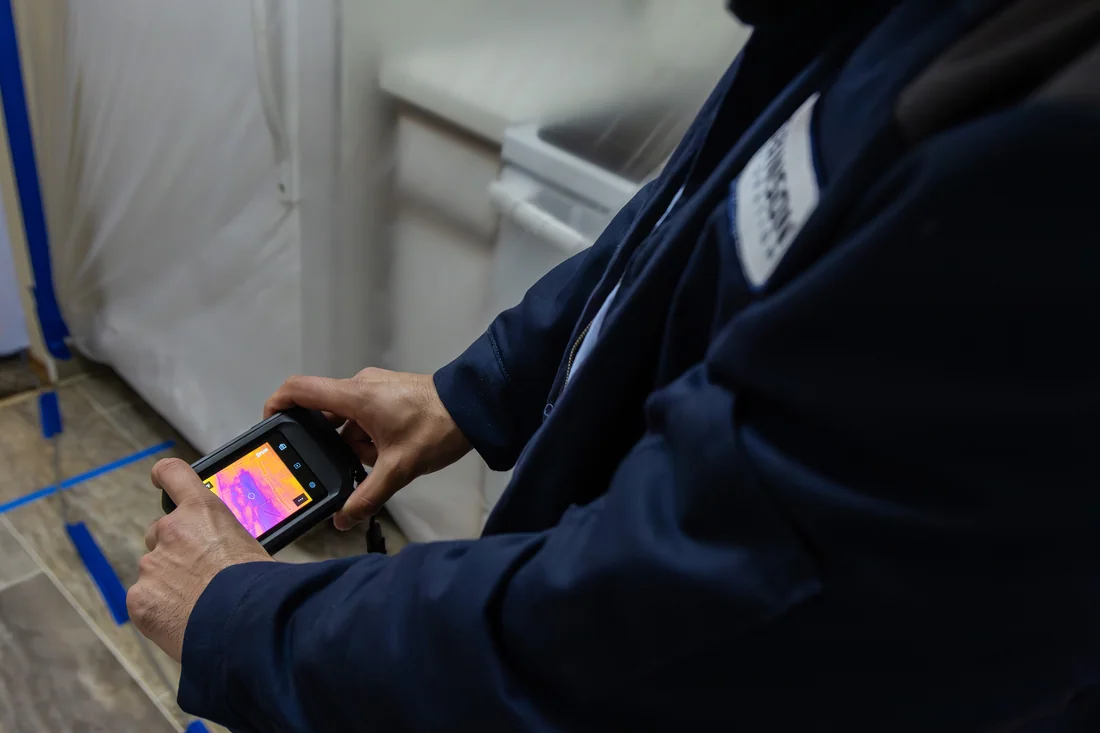
Robinson Restoration is an IICRC-certified mold remediation company serving Tri Cities, WA. We find the moisture source first, contain the work area with negative air and HEPA filtration, remove what the water damaged, and verify the space is clean before the containment comes down.
Nobody expects mold in a desert. Tri Cities sits in one of the driest corners of Washington, so a musty smell in a hall closet or behind a laundry wall usually gets blamed on something else first. The dry air outside has almost nothing to do with what's growing inside a wall cavity.
Local moisture is almost always mechanical or landscape driven. Swamp coolers push damp air through a house all summer and leave pads, ducts, and roof curbs wet. Lawn irrigation runs hard from April through October and pushes water into soil right against the foundation, where it feeds crawl spaces under older Richland and Pasco homes. Then the house gets sealed up for air conditioning in July, shower and kitchen humidity has nowhere to go, and growth starts in the quietest corner of the building.
Our Tri Cities office covers Benton and Franklin counties and the farm ground beyond them. A job starts with an inspection: moisture readings, a look at the mechanical side, and a written scope of what's actually affected. We build containment, run negative air with HEPA filtration, correct the water source, and apply antimicrobial treatment where it's warranted. Air and surface verification comes before anything gets closed up, and the file is documented for your carrier. Rebuild work is managed through vetted licensed contractors and sister companies.

Mold work moves in order here: find the water first, contain the area second, and verify the air before anyone calls it finished.
We start with moisture readings and thermal imaging to find the source and map how far growth has spread. Mold you can see is rarely all of it.
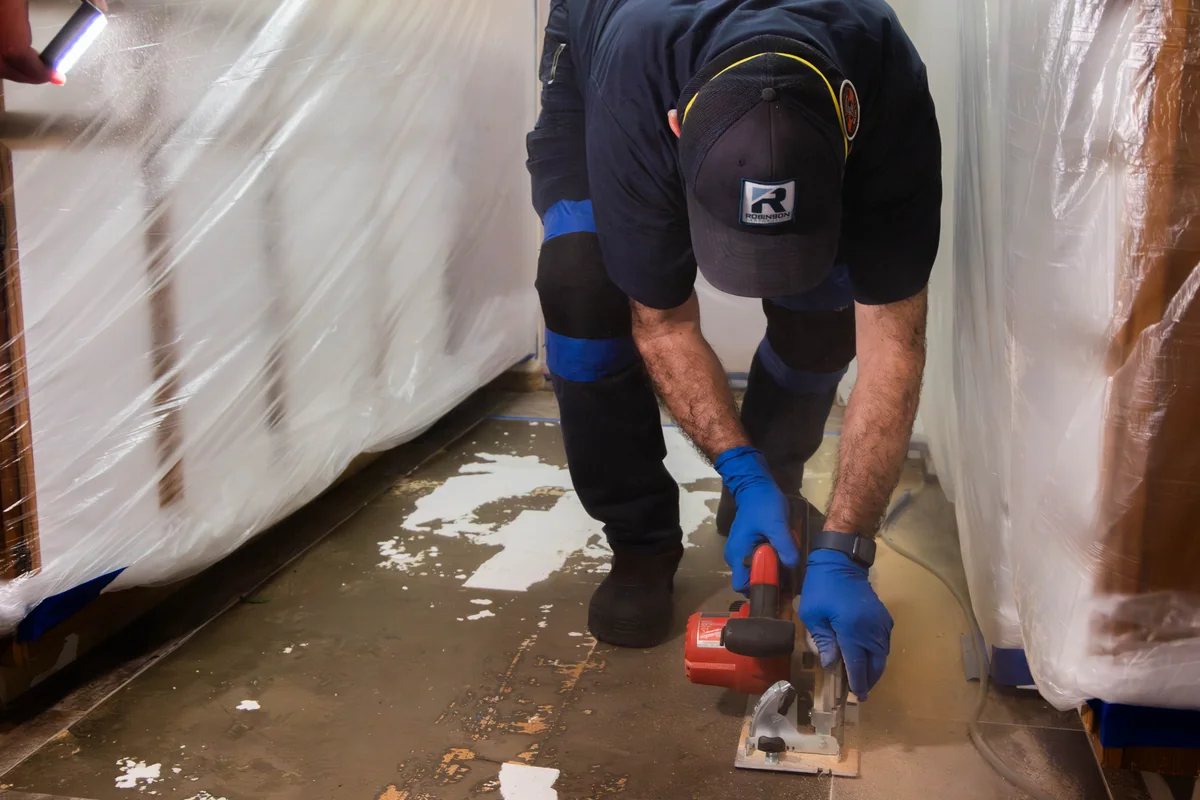
Plastic containment and negative air with HEPA filtration go up before removal starts, so spores never travel to clean rooms while we work.
Air and surface checks verify the space is clean before containment comes down. Any repairs are managed through vetted licensed contractors and sister companies.
Evaporative coolers are common across the Basin because they're cheap to run in dry heat. They also add real humidity to a house every hour they operate. Wet pads, corroded pans, and roof curb leaks put water into ceilings and duct chases where nobody looks. We check the unit and its path before writing a remediation scope.
Richland grew fast during the Hanford years, and a lot of that original housing is still occupied and remodeled several times over. Those homes bring shallow crawl spaces, thin or missing ground vapor barriers, and additions framed onto older walls. Moisture collects at those seams. We inspect crawl spaces and remodel joints on any home from that era.
Keeping a green lawn in shrub-steppe country takes a lot of water, and most yards get it every day through summer. Heads that spray siding, drip lines run tight to the foundation, and beds graded toward the house keep the soil saturated for months. That steady wetting shows up as stained baseboards, soft drywall behind furniture, and dark edges under the flooring at exterior walls.
Franklin and Benton county operations run buildings that residential rules don't cover: cold storage, wash-down rooms, pump houses, and office space bolted onto a metal shell. Humidity swings hard between those spaces, and condensation lands on insulation and framing at the transitions. We handle those jobs on a production schedule and contain so the rest of the building stays open.
In Tri Cities the growth we find is concentrated in three places: crawl spaces, bathrooms, and windows and exterior walls. Each one holds moisture for a different reason, which changes how the work gets scoped.
Older homes here sit over shallow, dry-dirt crawl spaces that were never meant to handle daily irrigation. Once the soil around the footing stays wet all summer, that moisture rises through the ground and settles on floor joists and subfloor.
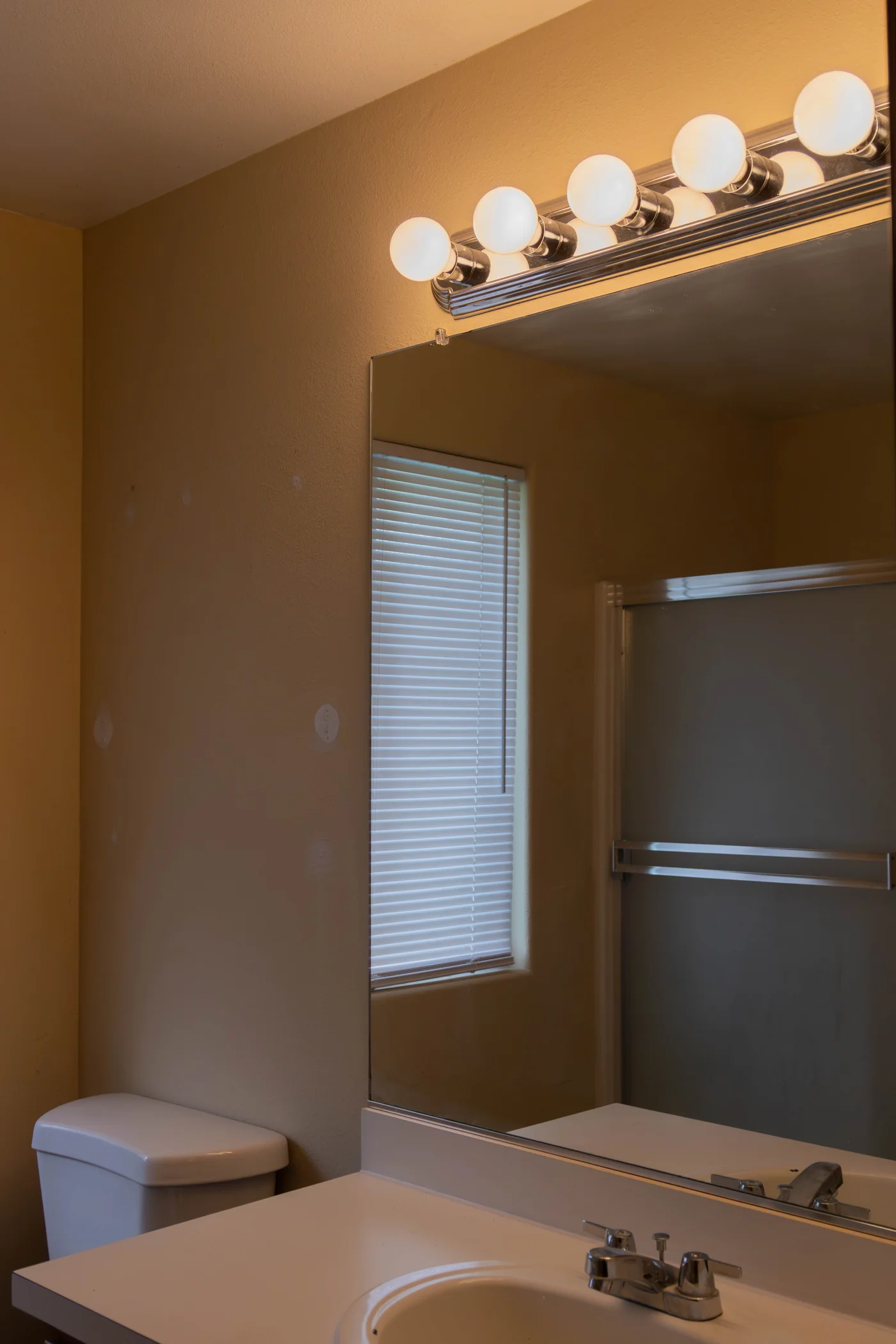
In a climate this dry, bath fans get treated as optional. Plenty of them are undersized or dumped straight into the attic. Steam then condenses on cold sheathing above, and the ceiling around the fan is usually the first thing to spot.
Basin winters bring long inversions and valley fog, and a closed-up house holds shower and cooking humidity. Old aluminum frames and single-pane glass run cold enough to sweat every morning, which soaks the sill, the caulk joint, and the drywall behind it.
Water is how most losses start. It’s rarely where they end. The same local crew handles all of it.
When remediation requires taking out drywall or flooring, we manage the rebuild too. Drag the handle to compare a documented Robinson project.
“We've had the bittersweet opportunity to have Robinson in our lives twice now. First, for a major 3,000 sq ft mold remediation of our crawl space. Then last week, we had an unfortunate flood. I don't know what we would have done without them.”
T Marie C · Google Review
“Chuck and Cole were very professional, courteous and knowledgeable about their restoration skills including close out processes. I'm really happy they were the two employees assigned to our home.”
Joanna Gamble · Google Review
“I want to express our sincere gratitude to the Robinson team that quickly moved to identify, rectify, repair, and then clean up the mess left by an itty-bitty hot water leak that went unnoticed because of its location.”
Michael Quinn · Google Review
In Washington, you choose your restoration contractor, and your carrier can’t penalize you for it. We document every Tri Cities loss with moisture maps, photos, and daily readings, then bill your insurer directly. You pay your deductible. That’s it.
Subject to policy coverage and deductible. We handle the paperwork, photos, and adjuster calls.
Robinson Restoration works across Kennewick, Pasco, Richland, and West Richland, along with the smaller Benton and Franklin County communities around them. If you're smelling something musty, seeing spotting on drywall, or dealing with a leak that sat too long, call and we'll get an inspection scheduled. You'll get a written scope of what we found and a straight answer about what it takes to fix it.
Yes, and it does regularly. Outdoor humidity has little to do with it. Mold needs a wet material, and this area supplies plenty of them: swamp cooler pads, sprinkler-soaked foundation soil, supply lines under slabs, and bathrooms without working exhaust. The dry climate mostly changes the timeline, because a slow leak in a closed wall cavity can run for months before anyone notices an odor.
Sometimes, and it depends on your policy and what caused the growth. Most carriers treat mold as a consequence of a water loss, so coverage usually turns on whether that water event was sudden and accidental. Long-term seepage, deferred maintenance, and landscape water at the foundation are commonly excluded, and many Washington policies cap mold at a set dollar amount. We document the source and the moisture history so your adjuster has facts, though nobody here can promise you a coverage decision.
Testing helps when the source isn't obvious or when someone needs a documented result, like a sale or a tenant dispute. If there's visible growth and a known leak, the money is better spent on removal. Either way, we verify before we clear: air sampling and surface checks inside the containment, compared against an outside baseline, with the results written into your file. If a number comes back wrong, we keep working.
That smell is worth taking seriously. Evaporative coolers keep their pads damp by design, and the pan, the ducting, and the ceiling around a roof-mounted unit stay humid all summer. A musty odor at startup often points to growth on the pads or in the first few feet of duct. We inspect the unit, the drop, and the ceiling cavity, then scope containment for what's actually affected.
Get it looked at before it becomes a dispute. We do an inspection, document conditions with readings and photos, and give you a written scope that separates the moisture repair from the remediation. Landlords in Washington are responsible for keeping a unit habitable, so a paper trail matters. If the growth is minor and the source is a running toilet or a failed washer box, the fix is usually straightforward.
Most residential jobs run a few days start to finish. A single bathroom or one wall cavity gets contained, removed, treated, and verified fairly quickly. Larger scopes and anything involving ductwork take longer. Families usually stay in the home, because containment and negative air keep the work area separated from the rest of the house. If the affected area includes the only bathroom or the main HVAC return, we'll tell you that up front.
Found mold or smell something musty? Call the Tri Cities office and we'll start with an inspection.
Licensed · Insured · IICRC Certified · Serving Washington & Oregon