Robinson Restoration is an IICRC-certified mold remediation company serving Kent, WA. We find the moisture source first, contain the work area with negative air and HEPA filtration, remove what the water damaged, and verify the space is clean before the containment comes down.
Mold in Kent usually starts somewhere nobody looks. A vented crawl space under a hillside home, the back of a closet on an exterior wall, roof sheathing above an insulated attic hatch. By the time the smell reaches the living room, the growth has had a wet season to spread.
Two things drive it here. First, the rain: November through February keeps outdoor humidity high for weeks at a stretch, and wood framing never gets a real chance to dry. Second, the housing stock. Kent's hills filled in with decades of tract homes built over vented crawl spaces, while the valley floor holds older apartments, townhomes and tilt-up commercial space. Add original bath fans, aluminum window frames and glacial till that holds water, and cold surfaces stay damp all winter.
Our Kent operations center covers King, Pierce, Snohomish, Thurston and Lewis counties, so the technician who inspects your home already knows this housing stock. The inspection comes first: we find the moisture source, read surrounding materials and map how far growth has traveled. Then we seal the work area, run negative air with HEPA filtration, remove and treat affected materials, and verify air and surfaces before containment comes down. Every step gets photographed and written up for your claim file.

Every Kent mold job runs the same order: find the water, seal the room, remove what's damaged, then prove the air is clean.
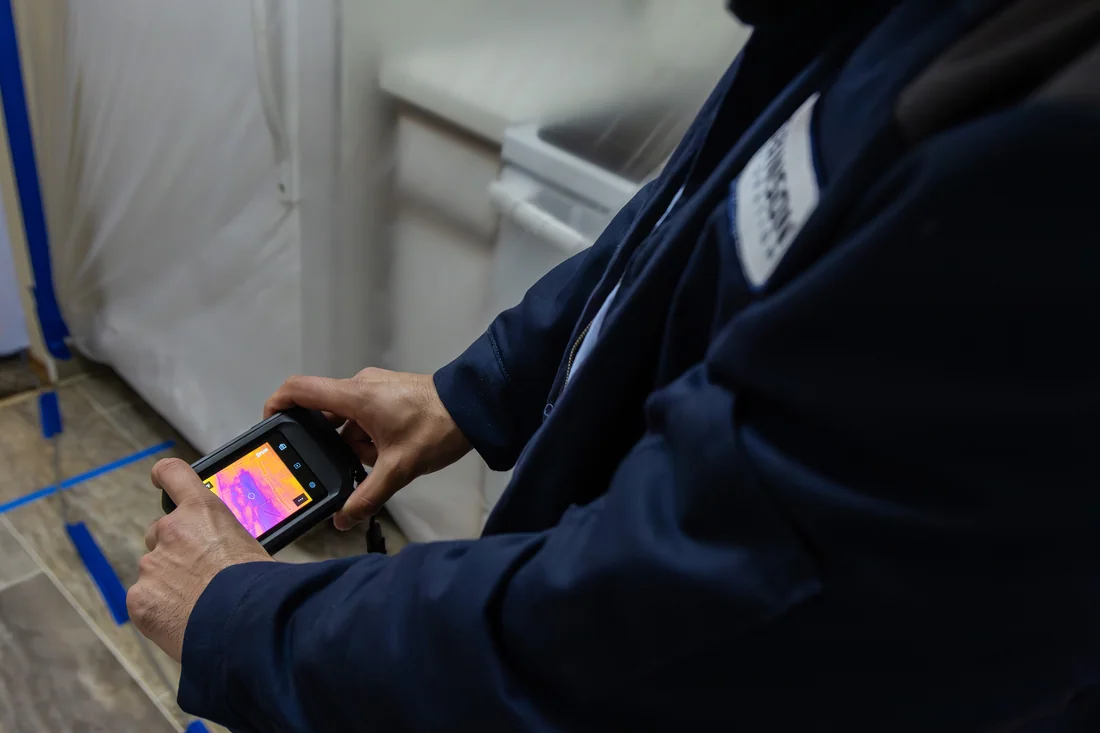
We start with moisture readings and thermal imaging to find the source and map how far growth has spread. Mold you can see is rarely all of it.
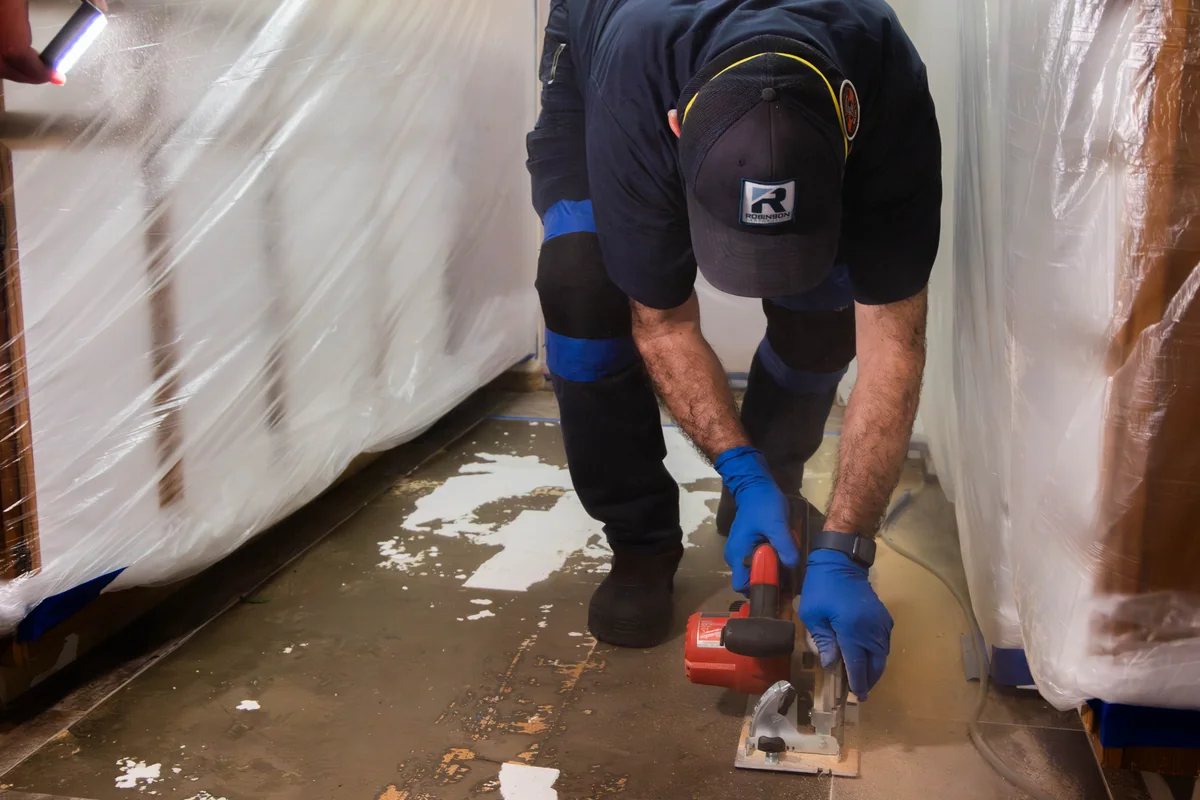
Plastic containment and negative air with HEPA filtration go up before removal starts, so spores never travel to clean rooms while we work.
Air and surface checks verify the space is clean before containment comes down. Any repairs are managed through vetted licensed contractors and sister companies.
Glacial till doesn't drain. Water perches above it and moves sideways along the slope, and a vented crawl space in its path stays damp for months. Torn vapor barrier, insulation sagging out of the joist bays and a musty draft that pushes up through the floor registers are the usual signs. We correct the water first, then remediate.
Plenty of homes here have a bathroom fan that dumps warm, wet air straight into the attic instead of through the roof. Run it all winter and the underside of the sheathing turns dark, usually on the north slope where it stays coldest. Fixing the ducting and the ventilation matters more than scrubbing the wood.
Kent has a lot of stacked and attached housing, which means a slow leak upstairs shows up as a stain on somebody else's ceiling. Shared walls complicate the fix, because the wet cavity rarely stops at the property line. We scope both sides, work with the owner or the management company, and keep containment tight so neighboring units stay usable.
Tilt-up buildings on the valley floor run cold and mostly unconditioned. When a mild, wet stretch follows a cold snap, moisture condenses on the slab and on steel, and anything porous sitting on that floor takes it up. Cardboard cases, pallets and stored paper go musty first. We contain, treat and dry the area without shutting the whole building down.
In Kent the growth we find is concentrated in three places: crawl spaces, bathrooms, and windows and exterior walls. Each one holds moisture for a different reason, which changes how the work gets scoped.
Most Kent houses sit over a vented crawl, and ground moisture wicks up into joists and subfloor long before anything shows inside. Look for a stained vapor barrier, rusty duct straps and insulation that has dropped out of the bays.
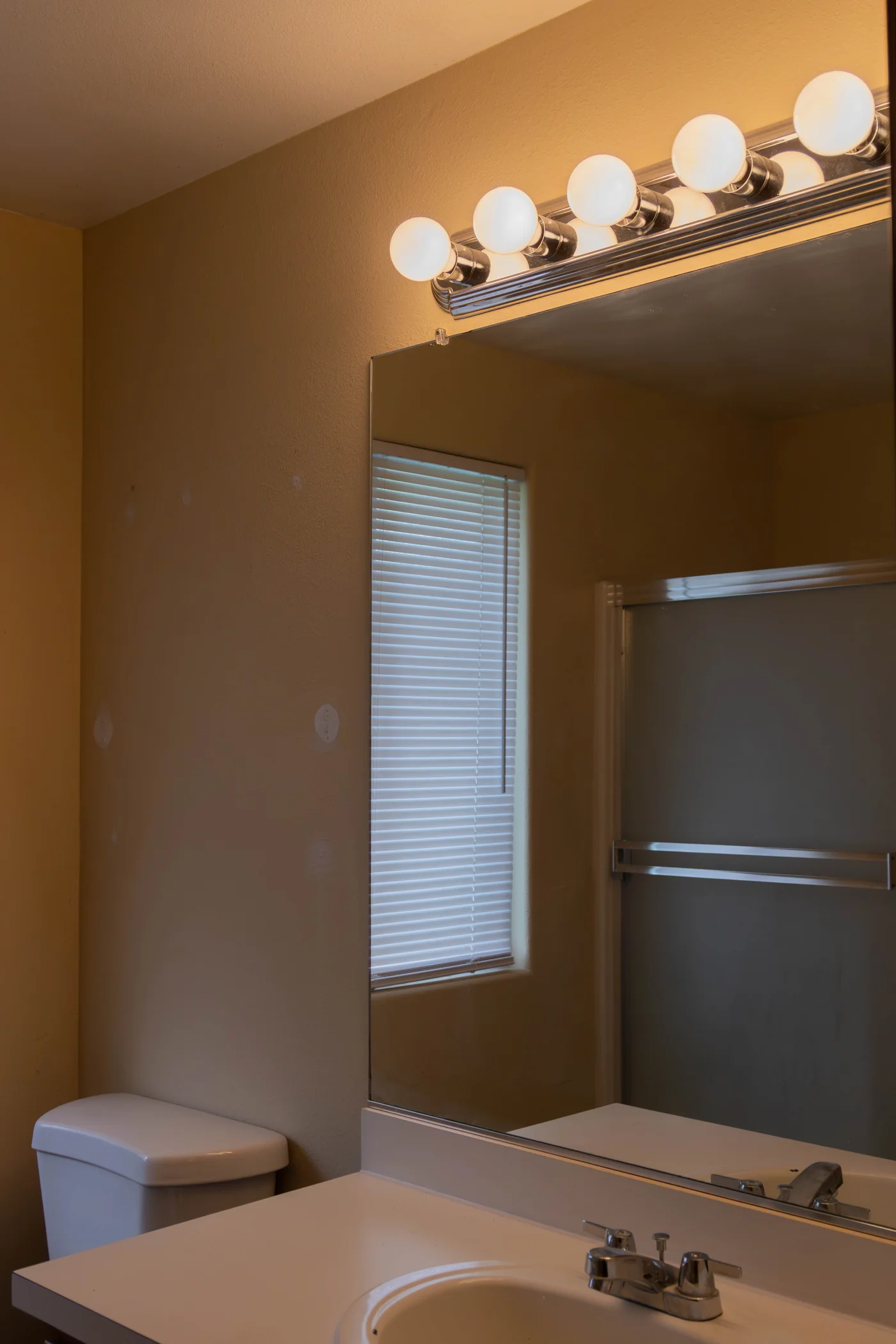
Older tubs and surrounds move a little with use, grout opens up, and water gets behind the wall board. With the fan undersized and the window shut through a wet Kent winter, that cavity never dries and the drywall paper feeds growth.
Aluminum frames from the tract-building decades conduct cold straight through. Warm indoor air hits that metal and the glass, condensation runs down onto the sill and the wall below, and by February the caulk line and the sheetrock behind it are stained.
Water is how most losses start. It’s rarely where they end. The same local crew handles all of it.
When remediation requires taking out drywall or flooring, we manage the rebuild too. Drag the handle to compare a documented Robinson project.
“We've had the bittersweet opportunity to have Robinson in our lives twice now. First, for a major 3,000 sq ft mold remediation of our crawl space. Then last week, we had an unfortunate flood. I don't know what we would have done without them.”
T Marie C · Google Review
“Chuck and Cole were very professional, courteous and knowledgeable about their restoration skills including close out processes. I'm really happy they were the two employees assigned to our home.”
Joanna Gamble · Google Review
“I want to express our sincere gratitude to the Robinson team that quickly moved to identify, rectify, repair, and then clean up the mess left by an itty-bitty hot water leak that went unnoticed because of its location.”
Michael Quinn · Google Review
In Washington, you choose your restoration contractor, and your carrier can’t penalize you for it. We document every Kent loss with moisture maps, photos, and daily readings, then bill your insurer directly. You pay your deductible. That’s it.
Subject to policy coverage and deductible. We handle the paperwork, photos, and adjuster calls.
Search results for mold removal near me will hand you a dozen names. What matters is who actually shows up, who finds the leak instead of painting over the stain, and who leaves you with documentation you can hand an adjuster. We work Kent constantly, on the hills and down on the valley floor, and an inspection is easy to book. Call and we'll tell you honestly what you're dealing with.
Because the water source is still there. On the hills, till under a few feet of soil pushes runoff sideways instead of down, so a crawl that was cleaned last spring gets wet again by November. We look at grade, downspout discharge, the vapor barrier and the vent openings before we quote remediation. Treating the surface without fixing what keeps it damp buys you one dry season at most.
Sometimes, and it depends on your policy and on how the mold got started. Many Washington carriers cover mold that follows a sudden, covered water loss, often up to a capped dollar amount, while excluding growth from long-term seepage, humidity or deferred maintenance. We can't promise coverage, and we won't pretend otherwise. What we can do is document the source, the moisture readings and the scope so your adjuster has a clean file to work from.
Testing has a place, though it isn't always the first step. If you can see growth, the money is better spent on finding the moisture and removing the material. Where testing helps is confirming the work: after remediation we verify air and surfaces inside the containment before we take it down, and we can coordinate an independent third-party clearance test when a lender, a buyer or a property manager wants one on paper.
Tell your landlord or property manager in writing, with photos and the date. Washington landlord-tenant law expects owners to keep a unit habitable, and most management companies here will bring in a remediation contractor once they have a written record. We take calls from owners, HOAs and management companies across the valley, and we're happy to walk a tenant through what to ask for even when we aren't the ones hired.
It shows up all over this region after a wet winter. Cold sheathing plus moist indoor air equals condensation, and the usual culprits are a bath fan venting into the attic, blocked soffit vents, or insulation stuffed tight against the eaves. Remediation involves containment at the hatch, HEPA filtration, treating and cleaning the wood, then correcting the airflow so the same wet season doesn't undo the work.
A single bathroom or closet is usually two to four days including drying and verification. Whole crawl spaces and attics run longer. Most families stay home, since containment and negative air keep the work zone sealed off from the rest of the house. If the removal opens up walls, flooring or cabinetry, Robinson manages the rebuild through vetted licensed contractors and our sister companies, so one person stays on the file.
Musty smell, a dark stain, or a crawl space you'd rather not open? Book a Kent inspection.
Licensed · Insured · IICRC Certified · Serving Washington & Oregon