Robinson Restoration is an IICRC-certified mold remediation company serving Olympia, WA. We find the moisture source first, contain the work area with negative air and HEPA filtration, remove what the water damaged, and verify the space is clean before the containment comes down.
Most mold we find in Olympia never started with a flood. It started with a vented crawl space, a winter water table sitting high under the joists, and a vapor barrier that tore years ago. By the time the musty smell reaches the living room, the growth is already established.
This corner of the south Sound collects more rain in a year than Seattle does, and the wet stretch runs from October into spring with almost no drying window in between. Older homes near downtown sit on shallow vented crawl spaces over ground that stays saturated. Newer subdivisions built from the 1970s onward have the opposite problem: a tighter envelope with ventilation sized to code and nothing more. Both hold moisture. Mold takes it from there.
Crews for Olympia dispatch from our Kent operations center, which covers Thurston County alongside King, Pierce, Snohomish, and Lewis counties. Work starts with a moisture inspection that traces the source, then containment and negative air with HEPA filtration so spores stay in the affected area. We remove what cannot be cleaned, treat what remains, and verify air and surfaces before clearing. Photos, readings, scope, and daily notes go to your carrier as the work happens.

Call any hour for an inspection, and when an active water loss is still feeding the growth, we're on-site in 90 minutes.
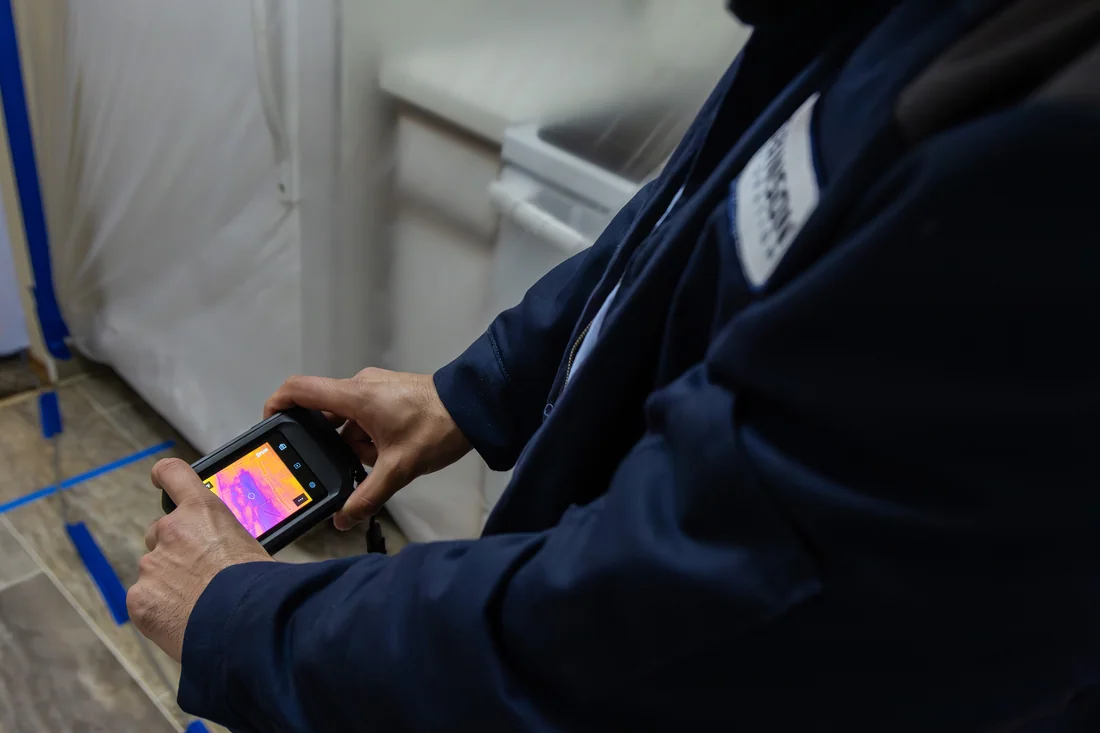
We start with moisture readings and thermal imaging to find the source and map how far growth has spread. Mold you can see is rarely all of it.
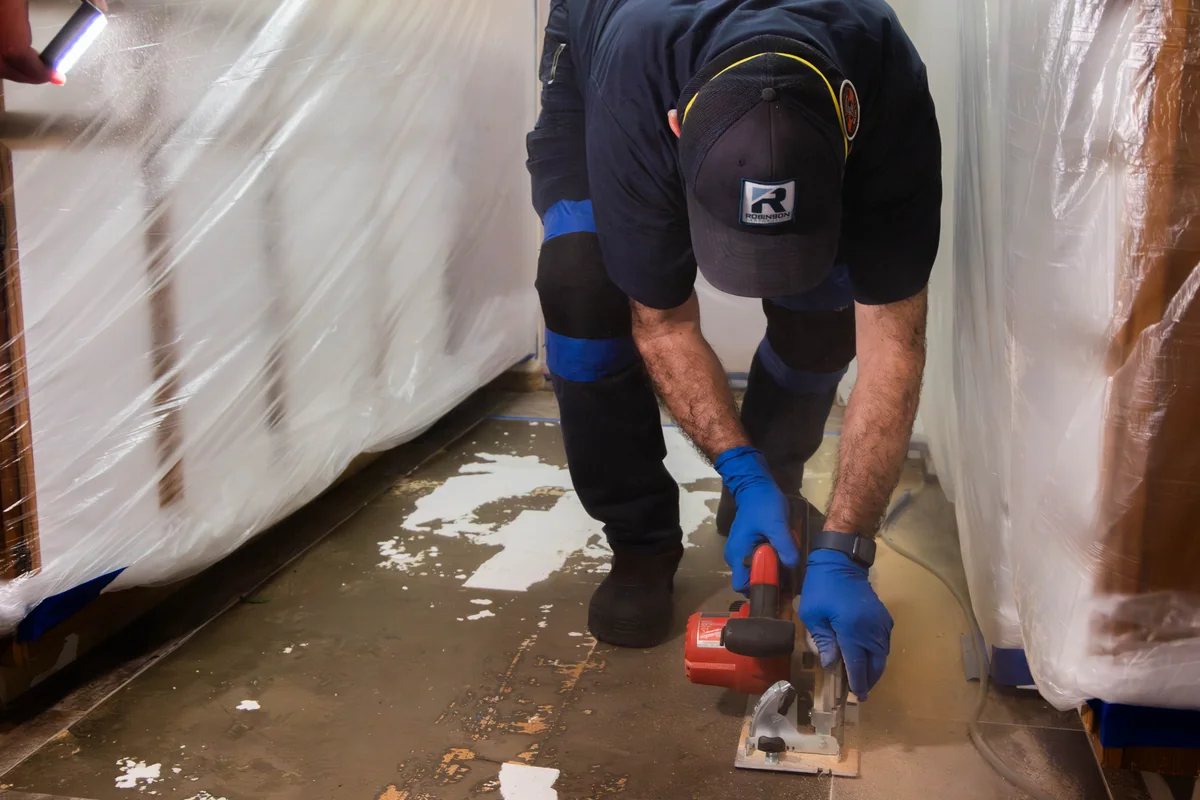
Plastic containment and negative air with HEPA filtration go up before removal starts, so spores never travel to clean rooms while we work.
Air and surface checks verify the space is clean before containment comes down. Any repairs are managed through vetted licensed contractors and sister companies.
Olympia sits under heavy conifer cover, and the north side of a house here can go from October to April without direct sun. Moss holds water on roofing, needles pack the gutters, and siding stays damp. The leak that follows is slow and quiet, so growth spreads inside the wall cavity long before a stain shows on the drywall.
Rain here comes most days from November through February, and the air stays near saturation between storms. A building that gets wet in December won't dry out until spring, so a leak that would be trivial in a drier climate turns into a remediation. We take moisture readings before anyone decides how far the work goes.
Craftsman-era homes here were built to leak air, and they dried themselves that way. Add blown-in insulation and new windows without addressing ventilation and the assembly holds moisture it was never designed to hold. Houses from the 1970s onward fail differently, with condensation forming where warm indoor air meets cold sheathing. We identify which pattern you have before removing anything.
Crawl space vents get blocked by landscaping, blackberry, and years of settled bark. Bath fans lose their pull or dump into the attic instead of outside. Dryer ducts pack with lint. None of that shows up on a home inspection punch list, and all of it raises indoor humidity through an Olympia winter. Correcting the airflow is part of the remediation, not an upsell afterward.
In Olympia the growth we find is concentrated in three places: crawl spaces, bathrooms, and windows and exterior walls. Each one holds moisture for a different reason, which changes how the work gets scoped.
Most homes here sit over a vented crawl space, and the soil under them stays wet from fall to spring. When the vapor barrier is torn or missing, that ground moisture rises into the joists, subfloor, and insulation, which then sags and stays wet.
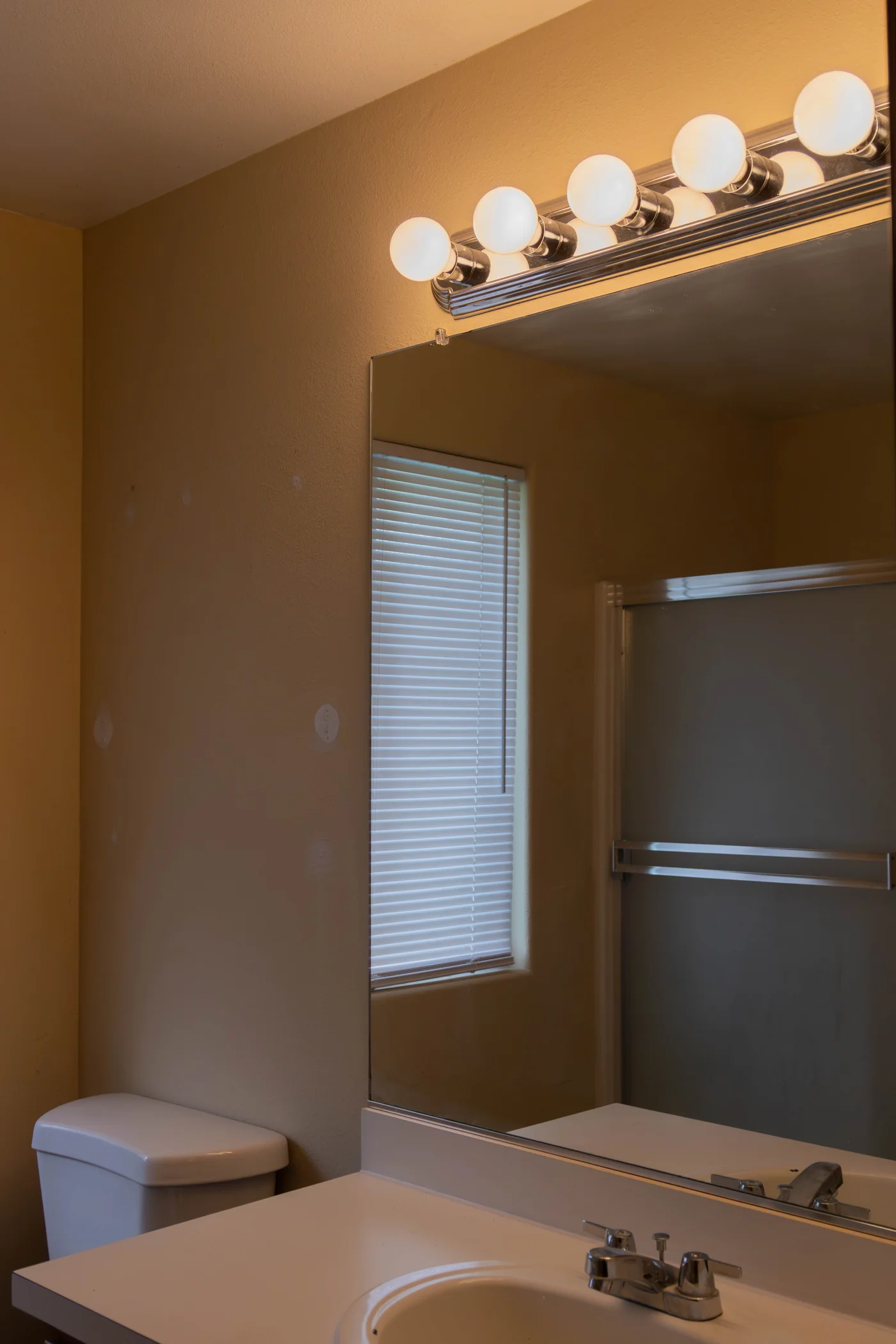
Hot showers in a cool house put a lot of water into the air, and an undersized fan cannot clear it before the next one. Grout and caulk fail quietly at tub surrounds, and in older Olympia homes the tile sits over a wood subfloor.
Original wood sash and early vinyl retrofits both run with condensation on a cold Olympia morning. The water collects on the stool, wicks into the casing and the wall below, and feeds growth behind the trim where nobody looks until the paint blisters.
Water is how most losses start. It’s rarely where they end. The same local crew handles all of it.
When remediation requires taking out drywall or flooring, we manage the rebuild too. Drag the handle to compare a documented Robinson project.
“We've had the bittersweet opportunity to have Robinson in our lives twice now. First, for a major 3,000 sq ft mold remediation of our crawl space. Then last week, we had an unfortunate flood. I don't know what we would have done without them.”
T Marie C · Google Review
“Chuck and Cole were very professional, courteous and knowledgeable about their restoration skills including close out processes. I'm really happy they were the two employees assigned to our home.”
Joanna Gamble · Google Review
“I want to express our sincere gratitude to the Robinson team that quickly moved to identify, rectify, repair, and then clean up the mess left by an itty-bitty hot water leak that went unnoticed because of its location.”
Michael Quinn · Google Review
In Washington, you choose your restoration contractor, and your carrier can’t penalize you for it. We document every Olympia loss with moisture maps, photos, and daily readings, then bill your insurer directly. You pay your deductible. That’s it.
Subject to policy coverage and deductible. We handle the paperwork, photos, and adjuster calls.
Searches for mold removal near me in Olympia usually come after a smell, a stain, or a home inspection report nobody expected. We cover Thurston County from our Kent operations center, and an inspection here gets the same containment, HEPA filtration, and verification work we run anywhere else in the region. Call and we will tell you what we find, including when the answer is that you don't need us.
Because the moisture source is still there. Cleaning and treating a crawl space does nothing if wet soil keeps evaporating into it all winter. We look at the vapor barrier, grading, downspout discharge, and standing water under the house, then correct what we can and tell you plainly what needs a plumber, a gutter contractor, or an excavator. Remediation without a source fix is a temporary result.
Sometimes, and it depends on your policy language and what caused the growth. Carriers generally respond when mold follows a sudden covered water loss, like a supply line that failed last week. Long-term seepage, deferred maintenance, and chronic humidity are usually excluded, and many policies cap mold at a set dollar amount. We document the cause and scope so your adjuster can decide on real evidence, and nobody at Robinson will promise you coverage before that happens.
Testing before the work tells you what species are present and at what levels, which is useful in some situations and unnecessary in others. Visible growth on a wet wall doesn't need a lab to confirm it. What matters more is verification at the end: air sampling and surface checks after remediation, compared against an outside baseline, before containment comes down. For sensitive jobs we bring in one of the independent industrial hygienists we partner with, so the clearance is not graded by the company that did the work.
Old houses moved a lot of air, and that airflow kept the wall cavities dry. Blowing insulation into those cavities and sealing up the windows stops the air movement while the moisture keeps arriving, usually from a crawl space, a bathroom, or a wall that never had a weather barrier. The cavity now stays damp through the winter. Fixing it means finding the moisture path first, then rebuilding the assembly so it can dry.
The owner or property manager authorizes and pays for remediation, so that is who signs our scope. Tenants can absolutely call us to get an inspection scheduled, and we will talk to the landlord directly. Washington requires landlords to give tenants written information about mold, and most owners here want the problem documented properly because that record protects them too. We keep tenant contents separate from structure in the paperwork.
Porous material with growth in it comes out inside containment, gets bagged, and leaves the building through a controlled path. Framing and other hard surfaces get cleaned, HEPA vacuumed, and treated with antimicrobial. Once the space passes verification, Robinson manages the rebuild through vetted licensed contractors and sister companies, working off the same file we built during remediation. A single point of contact carries the job from inspection through finished paint.
Musty smell, a stain, or growth you can see? Get an Olympia mold inspection on the schedule.
Licensed · Insured · IICRC Certified · Serving Washington & Oregon