Robinson Restoration is an IICRC-certified mold remediation company serving Bellevue, WA. We find the moisture source first, contain the work area with negative air and HEPA filtration, remove what the water damaged, and verify the space is clean before the containment comes down.
Most Bellevue mold calls start with a smell instead of a stain. Something musty coming off the floor register in a mid-century rambler. A dark bloom on the closet wall of a north-facing bedroom. By the time growth is visible, the moisture feeding it has usually been working for weeks.
Bellevue runs wet from October into May, and the dry stretch isn't long enough to undo it. Glacial till drains poorly, so winter water sits at the perimeter and drives vapor through concrete and crawl space soil. Houses from the fifties through the seventies sit over vented crawl spaces with thin or torn ground cover. Newer construction is tight enough that indoor humidity has nowhere to go when a bath fan isn't ducted right.
Our Kent operations center covers the Eastside, and the same crews work Bellevue week in and week out. We map moisture and find the source before anything gets cut. Affected areas go under containment with negative air and HEPA filtration, non-salvageable material comes out, and remaining surfaces get antimicrobial treatment. Air and surface verification runs before containment comes down. Every step is photographed and logged, so your carrier reviews the same file we work from.

We inspect before we quote, contain before we cut, and verify with air and surface testing before anyone calls the job finished.
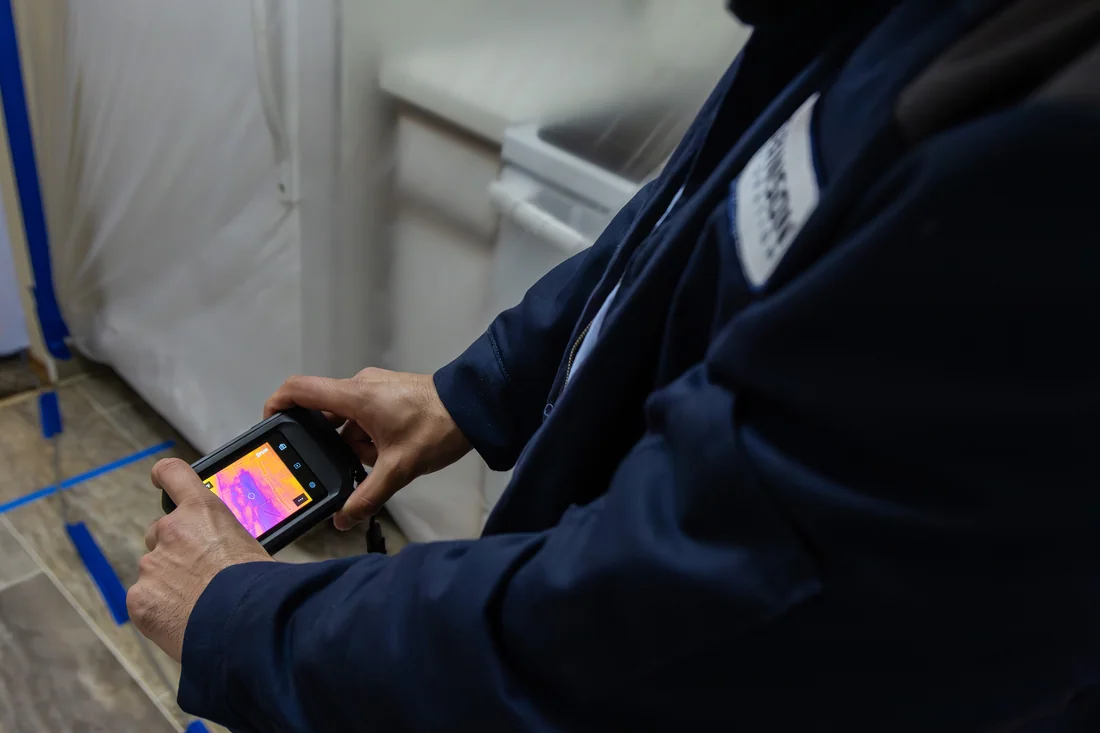
We start with moisture readings and thermal imaging to find the source and map how far growth has spread. Mold you can see is rarely all of it.
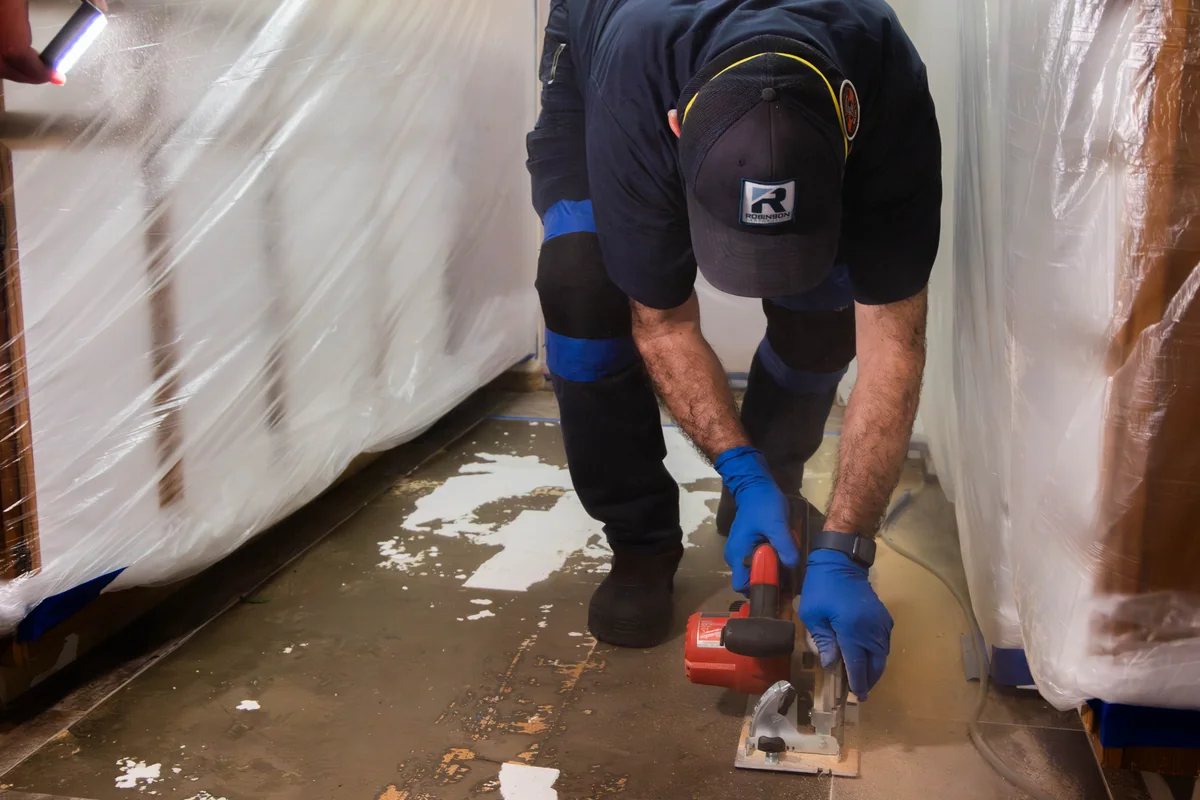
Plastic containment and negative air with HEPA filtration go up before removal starts, so spores never travel to clean rooms while we work.
Air and surface checks verify the space is clean before containment comes down. Any repairs are managed through vetted licensed contractors and sister companies.
Much of Bellevue's fifties and sixties housing sits over vented crawl spaces on ground that stays damp most of the year. When the plastic ground cover is torn, missing, or never covered the whole footprint, soil moisture goes straight into the joists and subfloor. Insulation sags, batts hold damp, and the smell comes up through the floor before anyone opens the hatch.
Warm, humid indoor air finds the attic through can lights, hatches, and bath fans that terminate short of the roof. On a cold Eastside night that vapor condenses on the underside of the sheathing and drips back into the insulation. Growth shows on the plywood and truss faces long before a ceiling stain appears. Blocked soffit vents from an insulation upgrade make it worse.
Daylight basements are everywhere on Bellevue's slopes, and plenty were finished with studs and carpet tight against below-grade concrete. Concrete gives off vapor all winter whether or not anything ever leaked. Trap that behind vinyl-faced insulation or a bookcase on an outside wall and you get growth on the back of the drywall, discovered only when someone finally pulls the baseboard.
Bellevue keeps its tree canopy, and the north wall of a house pays for it. On older wooded lots around Bridle Trails, siding can stay damp for weeks after the rain stops. Add a sprinkler head aimed at the foundation, a flower bed built up above the siding line, and gutters full of needles, and the assembly never gets a chance to dry.
In Bellevue the growth we find is concentrated in three places: crawl spaces, bathrooms, and windows and exterior walls. Each one holds moisture for a different reason, which changes how the work gets scoped.
The hatch usually tells the story: standing damp on the plastic, rusty duct straps, insulation hanging loose. In a vented Bellevue crawl, warm summer air hitting cool ductwork and joists condenses, so the space can gain moisture in July too.
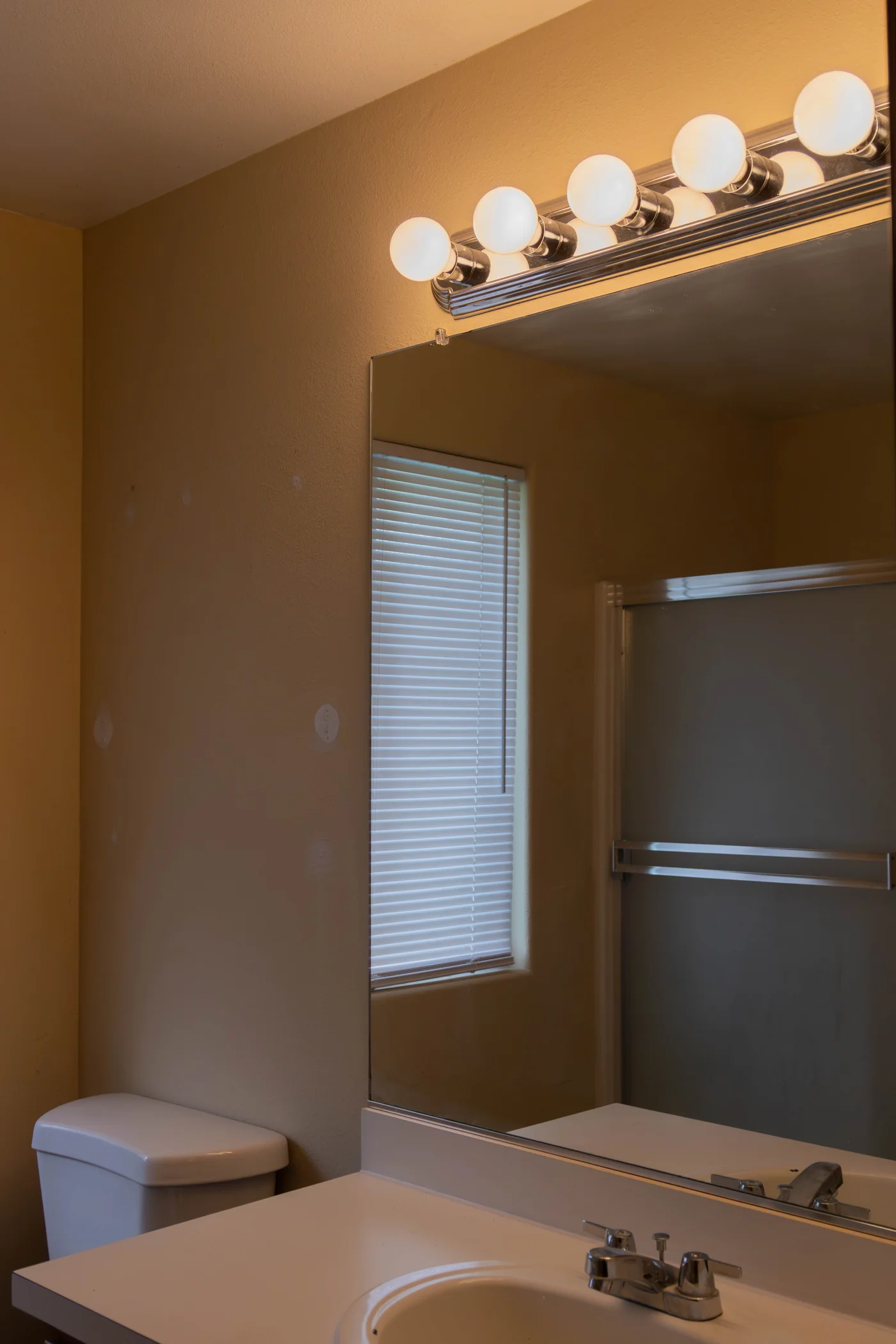
Older Eastside bathrooms came with a weak fan or none at all, and remodels often left the original duct. Steam settles into grout, window casings, and the wall behind the tub surround, where a failed caulk joint keeps a stud bay wet year-round.
Single-pane aluminum sliders and tired vinyl units sweat hard on a cold, wet night. Water runs to the sill, sits in the track, and feeds growth on casing, drywall returns, and the drapes. Bedrooms on the shaded side of the house are the usual spot.
Water is how most losses start. It’s rarely where they end. The same local crew handles all of it.
When remediation requires taking out drywall or flooring, we manage the rebuild too. Drag the handle to compare a documented Robinson project.
“We've had the bittersweet opportunity to have Robinson in our lives twice now. First, for a major 3,000 sq ft mold remediation of our crawl space. Then last week, we had an unfortunate flood. I don't know what we would have done without them.”
T Marie C · Google Review
“Chuck and Cole were very professional, courteous and knowledgeable about their restoration skills including close out processes. I'm really happy they were the two employees assigned to our home.”
Joanna Gamble · Google Review
“I want to express our sincere gratitude to the Robinson team that quickly moved to identify, rectify, repair, and then clean up the mess left by an itty-bitty hot water leak that went unnoticed because of its location.”
Michael Quinn · Google Review
In Washington, you choose your restoration contractor, and your carrier can’t penalize you for it. We document every Bellevue loss with moisture maps, photos, and daily readings, then bill your insurer directly. You pay your deductible. That’s it.
Subject to policy coverage and deductible. We handle the paperwork, photos, and adjuster calls.
Searching for mold removal near you usually means you've already found something you don't like: a smell, a spot behind the toilet, a report from a home inspector. Robinson crews cover Bellevue and the rest of the Eastside out of our Kent operations center. Call and we'll schedule an inspection, tell you plainly whether it needs remediation, and put the findings in writing for your insurer.
Because the moisture source is still there. Bellevue's till soils hold water, and a vented crawl over bare or partly covered ground will re-wet whatever gets cleaned. Remediation only holds when the ground cover is repaired end to end, standing water and drainage are corrected, and any duct or plumbing condensation is fixed. Correcting the source is written into our scope from the start.
Sometimes, and it depends on the policy. Many Washington homeowners policies cover mold when it results from a sudden, covered water loss, like a burst supply line, and many carry a dollar cap on that coverage. Mold traced to long-term seepage, humidity, or deferred maintenance is usually excluded. We won't tell you what your carrier will pay. What we will do is document the cause, the extent, and the work, so the claim gets decided on evidence.
Pre-testing is optional and often unnecessary when growth is visible and the moisture source is obvious. What happens after the work matters more. We verify with air sampling and surface sampling while containment is still up, comparing the work area against an outside baseline. On larger losses or anything headed to a carrier or a sale, we bring in one of the independent industrial hygienists we partner with to write the clearance, so the result isn't ours to grade.
Not always. Plenty of Bellevue houses still run original aluminum-frame windows, and those sweat hard from November through February. Surface growth on a cold window return or the back of a closet on an outside wall is usually a condensation problem, and cleaning plus better air movement and a working bath fan often settles it. Remediation is the answer when the material behind it is wet or growth has reached drywall paper and framing.
This one comes up a lot around here, with relocations, long assignments overseas, and homes held between tenants. Heat gets turned down, the fans never run, and a Bellevue winter puts months of humidity into a closed house. Start by having someone look before you air it out and scrub anything. We check the crawl, the exterior walls, and the HVAC first, since a system that ran through it may have moved spores everywhere.
A single bathroom or closet often runs two to four days including drying and verification. Whole crawl spaces and multi-room jobs run longer, and the moisture repair drives the schedule more than the cleaning does. Reconstruction is a separate scope. We manage the rebuild through vetted licensed contractors and our sister companies, with one manager holding the timeline, so the drywall, paint, and flooring match what the clearance file says was removed.
Musty smell, a spot on the drywall, or a bad inspection report? Call and we'll look at it.
Licensed · Insured · IICRC Certified · Serving Washington & Oregon