Robinson Restoration is an IICRC-certified water damage restoration company serving Sammamish, WA. Crews dispatch 24 hours a day, arrive on-site in 90 minutes or less, document the readings and photos your carrier needs, and bill your insurance directly on covered claims.
A second-floor laundry line lets go at two in the morning and by sunrise the water has found the great room ceiling. Plateau homes are big, and water travels a long way inside them. Sammamish calls reach a live dispatcher any hour, and a certified crew can be on-site in 90 minutes.
Most of the plateau went up between the early eighties and the mid two thousands, which means engineered floor trusses, multiple stories, and finished daylight basements cut into the slope. Under the topsoil is glacial till, dense enough that winter rain perches above it and moves sideways along the hillside instead of soaking in. Downspout lines and footing drains carry the load, and when one plugs, the water finds the basement wall.
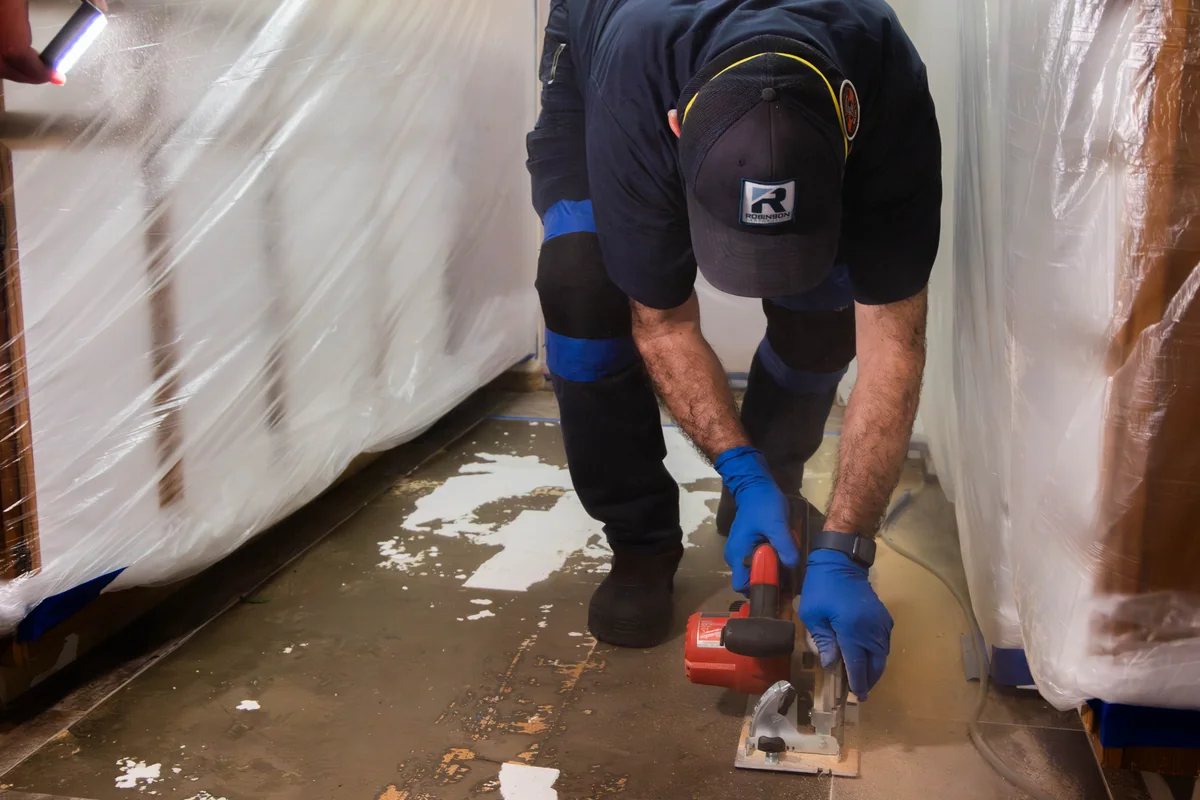
Our Kent crews cover the Eastside with trucks already stocked, and dispatch answers 24/7. On a Sammamish job we map moisture through every affected floor before anything gets cut, log readings daily, and photograph each assembly so the file holds up. Billing goes straight to your carrier. Larger homes often mean larger scopes, and reconstruction is managed through vetted licensed contractors and our sister companies rather than handed off to a stranger.

We keep Eastside crews staffed overnight, so a Sammamish call at 3 a.m. gets extraction started on the first visit instead of a morning appointment.
24 hours a day, 7 days a week, our crews dispatch the moment you call and start mitigation the same visit. Call dispatch or message us for immediate help.
We stop further damage with commercial extraction, structural drying, and antimicrobial treatment, and we walk you through the entire insurance claim as we work.
We manage your rebuild to pre-damaged condition through our trusted network of licensed contractors and sister companies. One manager, one timeline.
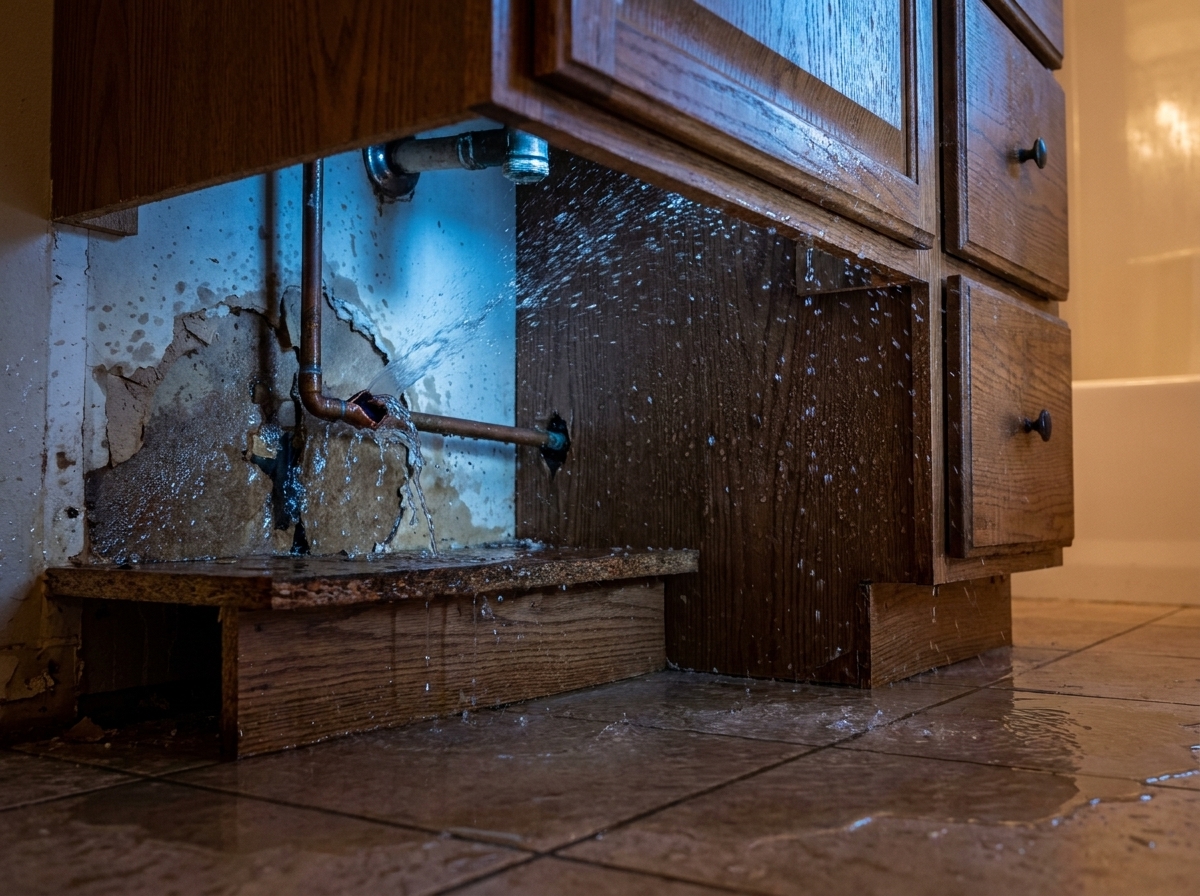
Homes built on the plateau in the eighties and early nineties sometimes still carry polybutylene supply piping, which gets brittle from years of chlorinated water and fails at the fittings. There's no warning drip. A line inside a wall or above a finished ceiling lets go at full pressure, and a two-story house gives that water three levels to work through.
The drop from the plateau toward Lake Sammamish is steep, and the till underneath doesn't absorb much. Through the wet months, groundwater rides along that hard layer and stacks up behind foundation walls on the downhill side. Homes with daylight basements and finished lower levels feel it first, usually as a damp corner in February that turns into a wet carpet pad by March.
Sammamish keeps a heavy fir canopy, which looks good and drops limbs across lines every time a south wind comes through. Power goes out, the sump quits, and the pit fills while nobody is home. A sump with no battery backup is only as reliable as the grid, and December is exactly when both the rain and the outages show up.
Plateau claims tend to run large: hardwood across an open main floor, custom cabinetry, and finished square footage on three levels. Carriers scrutinize those scopes closely, and matching questions come up fast when only part of a floor is affected. Detailed moisture mapping and a photo record of every assembly keep an adjuster from trimming a line item you actually need.
Most of the losses we run in Sammamish start one of three ways: appliance failures, burst and leaking pipes, and roof and storm leaks. Here is why each one happens here, and what it takes to dry it properly.
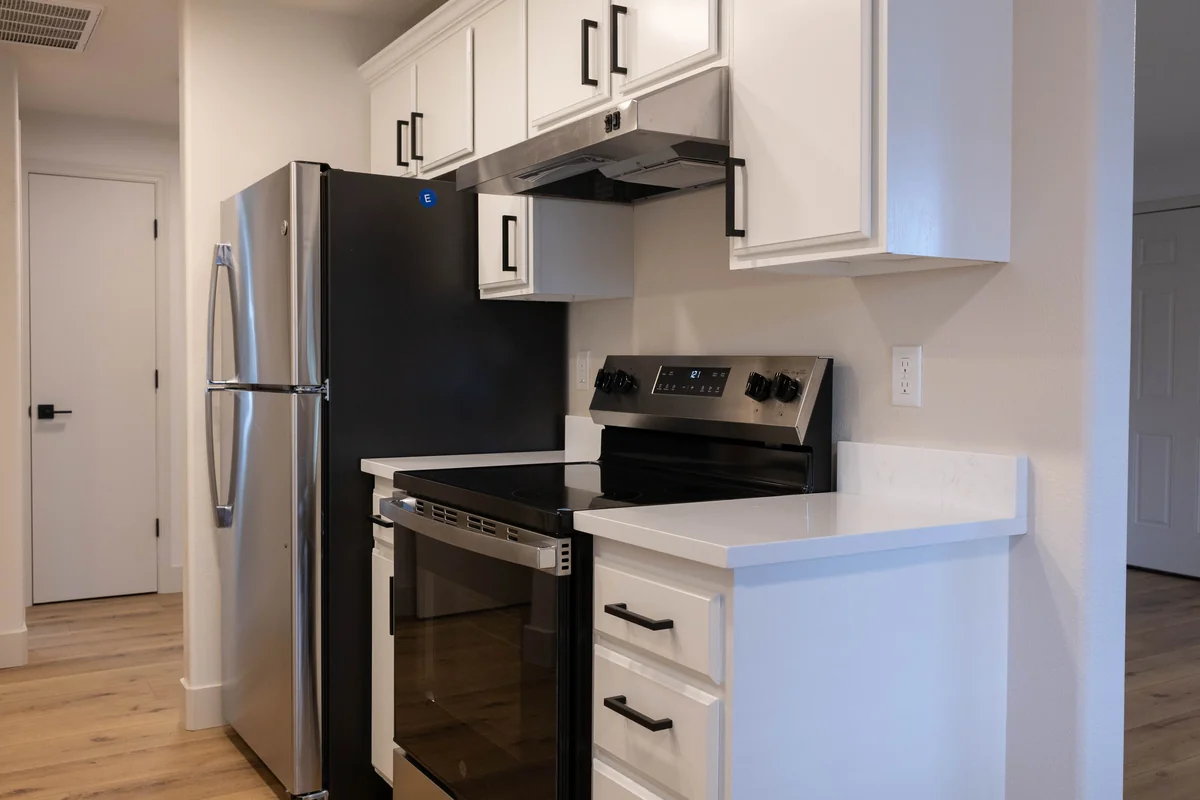
Upstairs laundry rooms, refrigerator ice lines, and second-floor bathrooms are standard in plateau homes. A braided supply hose or a slow drain pan leak sends water down through the ceiling below, often into the kitchen.
Lines run through unheated garage walls and vented crawlspaces on plenty of Sammamish builds. A hard freeze on the plateau splits them, and the break usually shows up hours later once the ice in the line finally clears.
Fir needles and moss pack the valleys on steep plateau roofs, and eight months of rain keeps them saturated. Water backs under shingles, tracks along a truss chord, and stains a ceiling well away from the actual entry point.
Water is how most losses start. It’s rarely where they end. The same local crew handles all of it.
Three real projects, photo-documented for the insurance carrier. Drag each handle to compare.
“Chuck and Cole were very professional, courteous and knowledgeable about their restoration skills including close out processes. I'm really happy they were the two employees assigned to our home.”
Joanna Gamble · Google Review
“We hired Robinson Restoration after a boiler joint failed and leaked what we thought was a small amount of water in our laundry room, but turned out to be more serious than it appeared. They did a fantastic job from first contact to insurance claim approval.”
Randi Covin · Google Review
“We had a major sewer back up a couple of weeks ago, into the laundry room and downstairs bathroom. Panic! We were referred to Robinson Restoration and what a blessing. The whole crew has been wonderful.”
Lynn Dee King · Google Review
In Washington, you choose your restoration contractor, and your carrier can’t penalize you for it. We document every Sammamish loss with moisture maps, photos, and daily readings, then bill your insurer directly. You pay your deductible. That’s it.
Subject to policy coverage and deductible. We handle the paperwork, photos, and adjuster calls.
Short answer: yes. Our crews work homes on the Sammamish Plateau regularly, and dispatch runs 24/7, so a burst pipe at midnight gets a live answer and a crew assignment on the same call. Techs show up with truck-mounted extractors, moisture meters and enough drying equipment for a full basement. Billing goes straight to your carrier, and we document moisture readings daily for the adjuster.
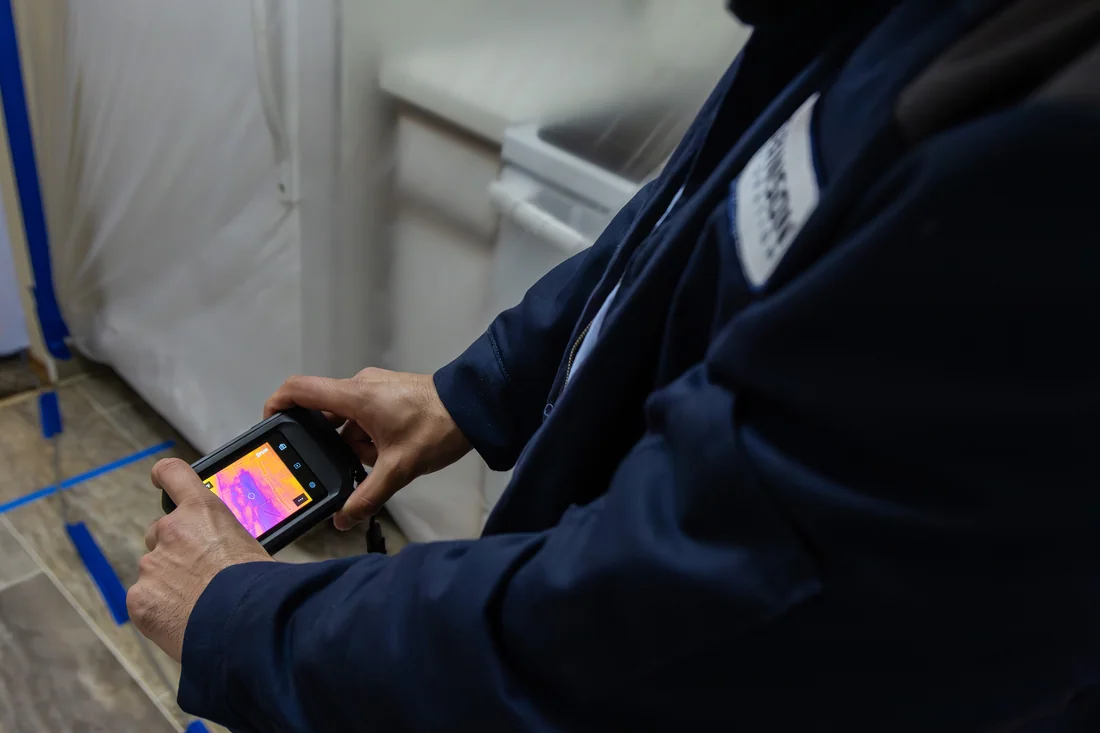
Farther than the stain suggests. In plateau homes the water runs along the top of the drywall, follows the floor trusses, and drops wherever it finds a seam or a can light. We scan the whole footprint with meters and thermal imaging before cutting, because guessing usually means opening the wrong ceiling twice. Insulation above that ceiling holds moisture and comes out even when the drywall looks salvageable.
That's groundwater, and it's common on the Sammamish hillside. Rain sits on the glacial till instead of draining down, then moves laterally until it hits your foundation. We'll confirm the source with meters and a look at your footing drains and downspout discharge, dry the affected assemblies, and tell you straight whether this is a restoration job, a drainage correction, or both. Carriers treat those two very differently.
Sometimes, and it depends on how long the water sat and what's under it. Engineered plank glued down behaves differently than solid oak nailed to plywood. We use mats that pull moisture up through the boards from below, monitor whether cupping flattens out, and give the floor a fair window before recommending replacement. On Sammamish jobs that call gets made with readings, not opinions.
We bill your carrier directly on most Sammamish losses, so you're responsible for the deductible and nothing else up front. Every day produces moisture logs, equipment records, and photos, delivered in the format adjusters expect. If somebody at the carrier questions the scope, we talk to them about it. You shouldn't have to argue drying science with an adjuster on your own time.
Move anything you care about off the lower level floor, then pull water with a wet vac if you have one and it's safe to run. Don't wait for the grid to come back. Sammamish outages during a wind event can stretch past a day, and a finished basement takes on serious water in that window. Call and we'll bring extraction equipment and our own power with us.
Drying and rebuilding are two scopes. We do the mitigation, extraction, controlled demo, and drying to IICRC S500, then manage reconstruction through vetted licensed contractors and our sister companies. That matters on Sammamish homes, where the finish level is high and the trim, cabinetry, and flooring need someone who'll match what was there. One point of contact stays with you through both phases.
Standing water on a finished lower level gets worse by the hour. Call and we'll dispatch a Sammamish crew now.
Licensed · Insured · IICRC Certified · Serving Washington & Oregon