Robinson Restoration is an IICRC-certified water damage restoration company serving SeaTac, WA. Crews dispatch 24 hours a day, arrive on-site in 90 minutes or less, document the readings and photos your carrier needs, and bill your insurance directly on covered claims.
SeaTac is a city built around the airport, with 1950s and 1960s neighborhoods around Angle Lake and Bow Lake, apartment complexes along International Boulevard, and a hotel corridor that never closes. Robinson Restoration handles water losses across SeaTac for homeowners, landlords, and commercial properties alike.
The residential streets east and west of the airport were mostly built in the two decades after the runways went in, and those homes carry original supply lines and water heaters at the end of their life. Along Pacific Highway South, the property mix shifts to hotels, motels, and multifamily buildings where a single failed riser or sprinkler head can take out several floors. Drainage toward Des Moines Creek and the lakes keeps low ground saturated through the winter.
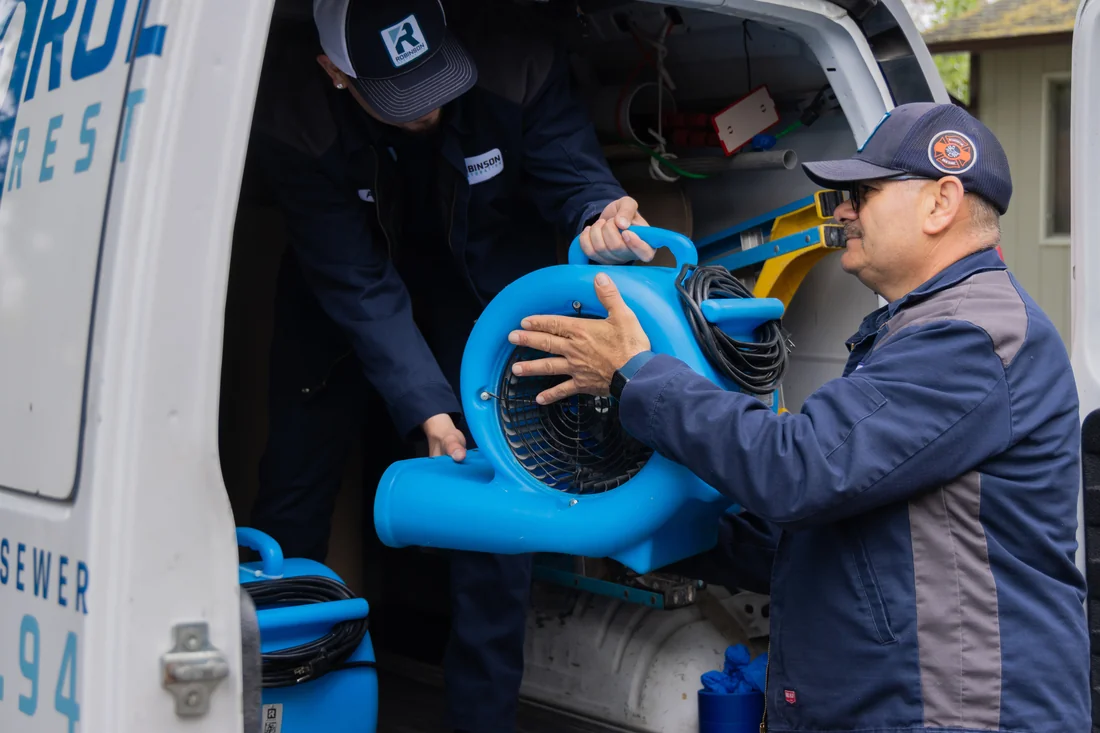
SeaTac is a short run from our Kent operation, and dispatch is staffed 24 hours a day. Crews arrive with extraction and drying equipment scaled to the job, whether that is a single-family kitchen or a hotel floor, and they document everything with moisture readings and photos. We follow IICRC S500 standards, bill carriers directly on covered claims, and coordinate rebuild work through vetted licensed contractors.

SeaTac calls get a Kent crew loaded for the size of the property, with a target of on-site in 90 minutes or less.
24 hours a day, 7 days a week, our crews dispatch the moment you call and start mitigation the same visit. Call dispatch or message us for immediate help.
We stop further damage with commercial extraction, structural drying, and antimicrobial treatment, and we walk you through the entire insurance claim as we work.
We manage your rebuild to pre-damaged condition through our trusted network of licensed contractors and sister companies. One manager, one timeline.
A water loss in a SeaTac hotel means guest displacement, revenue loss, and pressure to reopen. We contain the affected floors, extract and dry fast with commercial equipment, and keep the documentation ready for a commercial claim. Night and weekend response matters here, and dispatch never closes.
The homes around Angle Lake, Bow Lake, and McMicken Heights date from the 1950s and 1960s. Original galvanized lines, cast iron drains, and water heaters in closets fail on the same schedule across the whole neighborhood. The break hides behind drywall and under floors until a stain or a soft spot gives it away.
SeaTac has a lot of apartment housing, and a leak on an upper floor becomes a problem for every unit below it. We coordinate with property managers on access, contain the work so it does not spread, and keep documentation separate for each unit and policy so the claims stay clean.
Angle Lake, Bow Lake, and the Des Moines Creek drainage keep nearby ground saturated in winter. Homes on low lots see water in crawl spaces and against foundations. It is slow, quiet damage that rots framing before it is noticed, and it is usually not a covered loss, so we will be honest about that.
Most of the losses we run in SeaTac start one of three ways: water heater failures, burst and leaking pipes, and appliance failures. Here is why each one happens here, and what it takes to dry it properly.
Tank water heaters in SeaTac's 1950s and 1960s homes sit in closets and garages without pans and fail by rupturing, flooding floors and adjacent rooms in minutes.
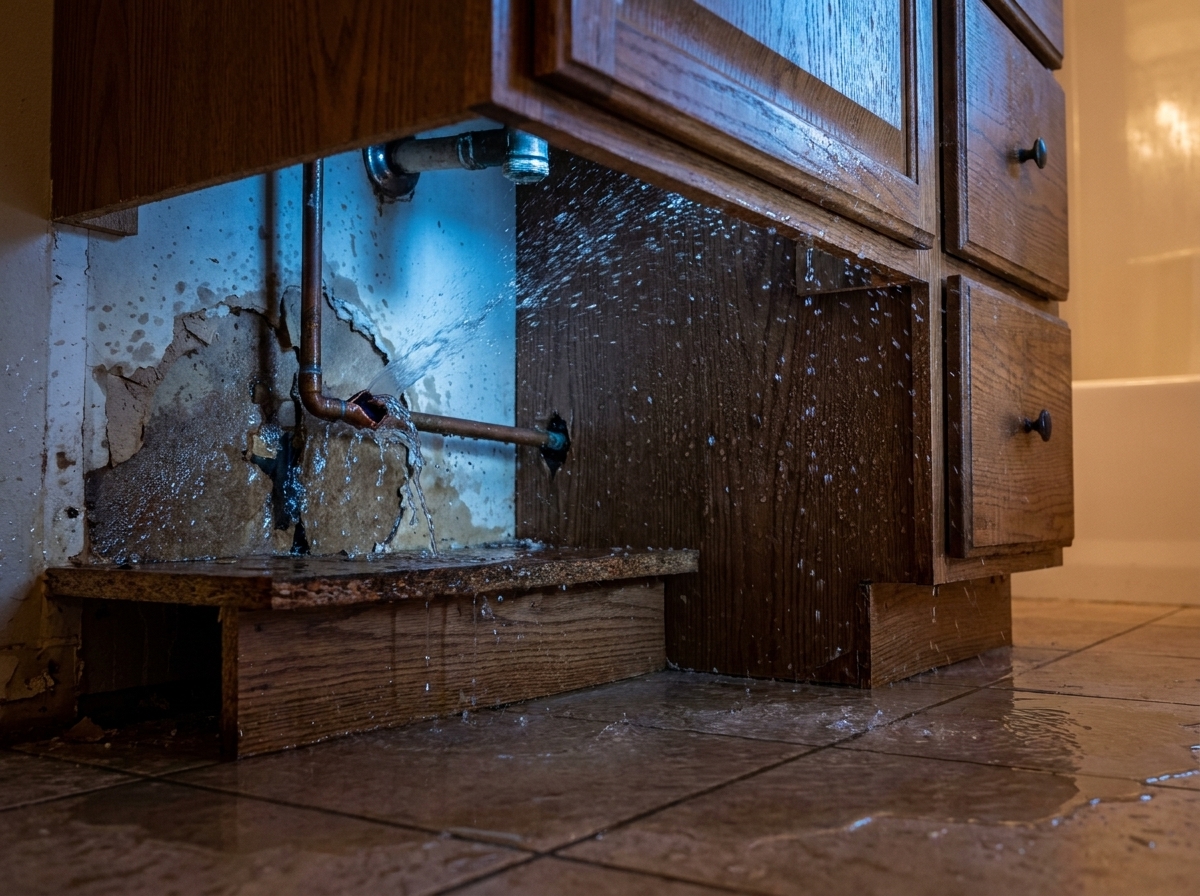
Original galvanized supply lines corrode at the threads and let go inside walls, and in multifamily and hotel buildings a single failed riser can flood several floors at once.
Dishwashers, washing machines, and refrigerator supply lines fail constantly in apartments and rentals, and in occupied buildings the water often runs for hours before a tenant reports it.
Water is how most losses start. It’s rarely where they end. The same local crew handles all of it.
Three real projects, photo-documented for the insurance carrier. Drag each handle to compare.
“Just started a project with Cole and Chuck at Robinson Restoration and had to write a review straight away. These guys have been fantastic. We were away on a week long trip when we had a kitchen leak that destroyed our flooring and subfloor.”
Justin O'Neill · Google Review
“I want to express our sincere gratitude to the Robinson team that quickly moved to identify, rectify, repair, and then clean up the mess left by an itty-bitty hot water leak that went unnoticed because of its location.”
Michael Quinn · Google Review
“Kyla and Jake were super friendly and knowledgeable. Jake was at my house 90 minutes after I called and did a free inspection. I won't need their services this time, but I will definitely call them if I ever have to deal with water damage.”
Carmen Otten · Google Review
In Washington, you choose your restoration contractor, and your carrier can’t penalize you for it. We document every SeaTac loss with moisture maps, photos, and daily readings, then bill your insurer directly. You pay your deductible. That’s it.
Subject to policy coverage and deductible. We handle the paperwork, photos, and adjuster calls.
Yes. Dispatch is staffed 24 hours a day, and hotel and commercial losses get the same response as residential emergencies. We aim to be on-site in 90 minutes or less, and the crew arrives with commercial extraction and drying equipment. We contain affected floors so unaffected rooms can stay in service and coordinate with your management on guest displacement.
As one building with separate files. We dry the structure from the top down, contain each affected unit, and keep moisture maps and photos separate for every policy involved, including the master policy. Property managers get one point of contact and a clear scope for each adjuster.
Usually not. Groundwater and saturated soil are excluded from standard homeowners policies, and the low ground around the lakes and Des Moines Creek stays wet for months. We can dry the crawl space, remove damaged insulation, and help identify the entry point, and we will be upfront that it is likely an out-of-pocket job. A burst pipe or failed appliance is a different cause and is generally covered.
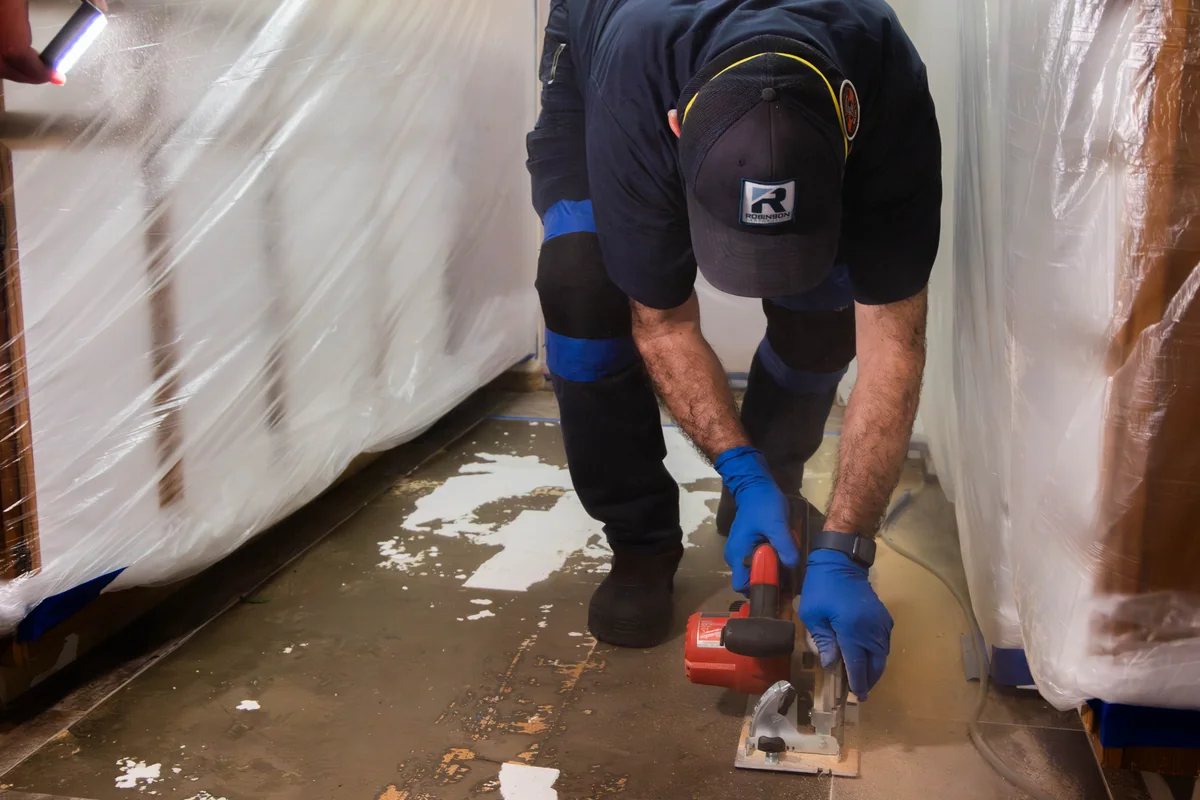
Only what is actually wet, which we determine with moisture meters and thermal imaging before opening anything. Water heater floods usually soak flooring, baseboards, and the bottom of drywall in the surrounding area. We dry framing and subfloor in place where readings allow and remove materials that have wicked water. Every removal is photographed and justified in the claim.
Regularly. We coordinate tenant access, keep the documentation organized for the owner's policy, and schedule around occupancy. For multi-unit buildings we treat the structure as one drying job and keep each unit's file separate. Landlords get a clear scope and a claim-ready file.
Not the drying itself, but we do plan equipment placement so air movers and dehumidifiers are not competing with occupied rooms in hotels and apartments. We take readings daily and pull equipment when the structure reads dry, usually three to five days for a typical loss. Larger commercial jobs run longer and are documented the same way.
A hotel floor or a home near the lakes, water spreads the same way. Call Robinson and get a SeaTac crew moving.
Licensed · Insured · IICRC Certified · Serving Washington & Oregon