Robinson Restoration is an IICRC-certified water damage restoration company serving Mercer Island, WA. Crews dispatch 24 hours a day, arrive on-site in 90 minutes or less, document the readings and photos your carrier needs, and bill your insurance directly on covered claims.
Mercer Island houses were largely built when galvanized steel and thin-wall copper were standard, and plenty of those runs are still in the walls. Add steep perimeter lots with daylight basements below grade, and one failed line can soak two levels before anybody hears it. Crews are on call every hour of the day.
The island core is 1950s and 1960s ramblers and split-levels, with larger newer homes filling in around them. Ground falls away from the plateau in every direction, so lower levels press against saturated soil from November through February. Heavy fir and cedar shade the roofs, keep moss growing, and pack the gutters. Windstorms across Lake Washington drop limbs and take out power, which shuts down sump pumps at the worst possible moment.
Dispatch is staffed 24/7 and our standard is on-site in 90 minutes. On the island the first move is usually containment on the level below, because water tracks down stair stringers and duct chases faster than people expect. Techs meter, map, and log daily to IICRC S500, then send a clean, photo-backed file to your adjuster. We bill the carrier directly. Rebuild work is managed through vetted licensed contractors.

Overnight crews stage for the I-90 corridor, so a Mercer Island call gets a live person on the phone and a truck rolling immediately.
24 hours a day, 7 days a week, our crews dispatch the moment you call and start mitigation the same visit. Call dispatch or message us for immediate help.
We stop further damage with commercial extraction, structural drying, and antimicrobial treatment, and we walk you through the entire insurance claim as we work.
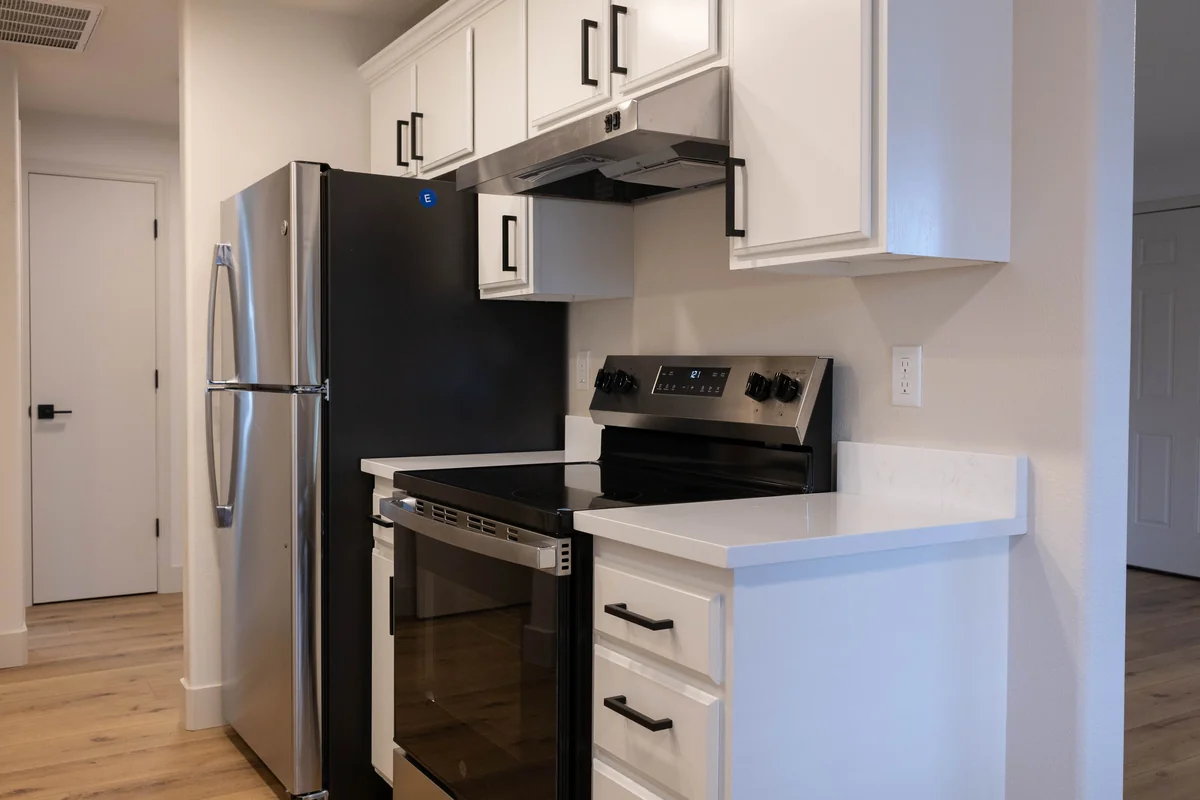
We manage your rebuild to pre-damaged condition through our trusted network of licensed contractors and sister companies. One manager, one timeline.
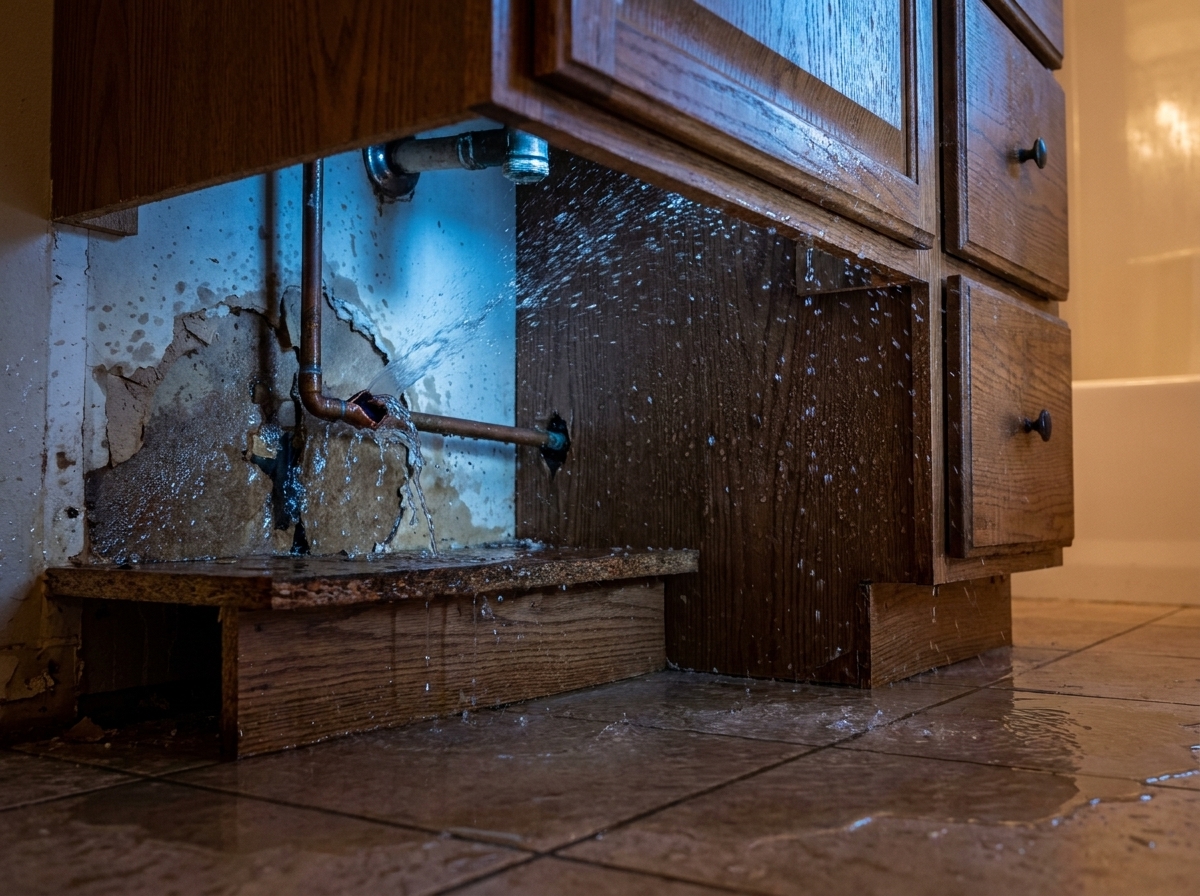
Galvanized pipe corrodes from the inside until a threaded joint gives out, and older soft copper develops pinholes at bends and near dissimilar fittings. Both failures start quietly inside a wall. On the island, a leak in a main-floor wall commonly drains straight into the finished level below, which is why so many losses here involve two floors instead of one.
Homes cut into the perimeter grade have one wall fully buried and another wide open to a yard. After a long wet stretch, the buried side takes hydrostatic pressure at cold joints and through-wall penetrations. Finished lower levels hide it well: carpet feels cool before it feels wet, and the drywall wicks upward behind the baseboard where nobody looks.
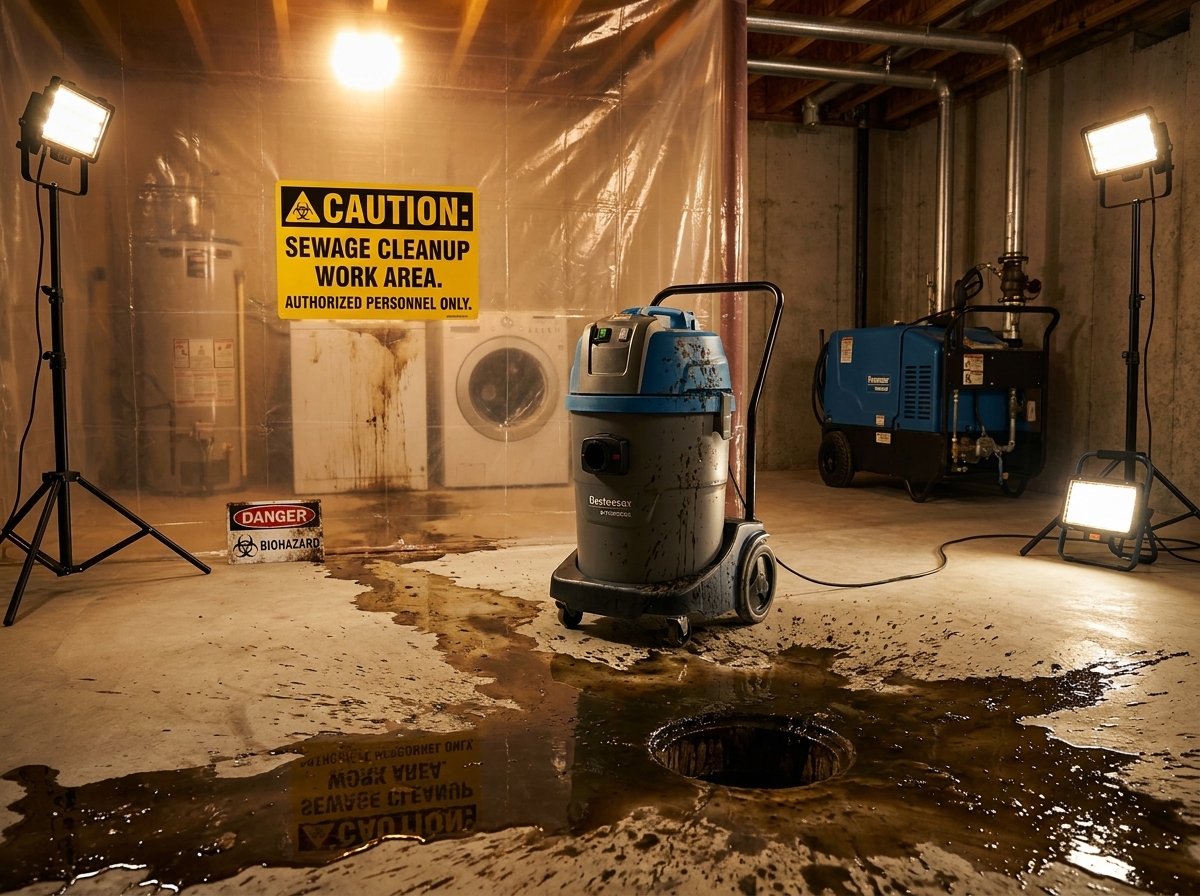
Mature firs and maples send roots straight into the joints of aging side sewer lines. The line slows, then blocks, and the lowest fixture in the house becomes the relief point. Basement toilets, floor drains, and laundry standpipes are the usual suspects. Anything that comes back up that way is Category 3 and gets handled accordingly.
Storms coming across the lake drop limbs on power lines several times each winter. A sump pump without a battery backup stops exactly when the ground is most loaded, and a basement that has never flooded can take water in a single night. Adding a backup pump and a sealed lid costs far less than replacing a finished lower level.
Most of the losses we run in Mercer Island start one of three ways: sewage backups, burst and leaking pipes, and flooding and groundwater. Here is why each one happens here, and what it takes to dry it properly.
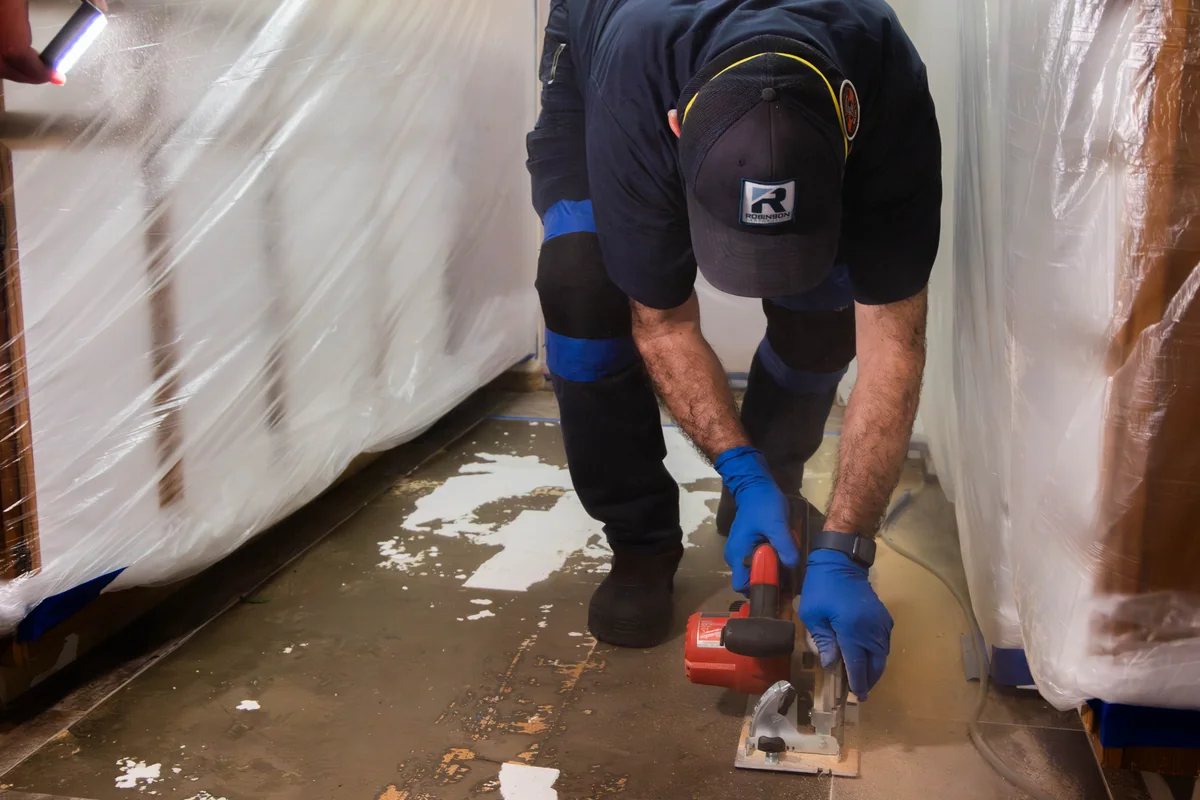
Root-blocked side sewers under old growth trees back up into basement fixtures. Contaminated water on a finished lower level means selective demolition and sanitizing before any drying equipment goes down.
Original galvanized and thin copper runs in mid-century island homes fail at joints inside walls, and the water drops through the floor system into the level below.
Saturated perimeter soil and a sump pump left without power during a windstorm let groundwater into daylight basements, usually in the long November to February stretch when the ground never dries out.
Water is how most losses start. It’s rarely where they end. The same local crew handles all of it.
Three real projects, photo-documented for the insurance carrier. Drag each handle to compare.
“We had a major sewer back up a couple of weeks ago, into the laundry room and downstairs bathroom. Panic! We were referred to Robinson Restoration and what a blessing. The whole crew has been wonderful.”
Lynn Dee King · Google Review
“One of the pipes in the shower burst and water damage got all over the roof in the kitchen. As new home owners we were very scared and panicked. We contacted Kelly Farmer from Robinson Restoration and believe me when I say I felt like more than half of my problem was solved.”
Nav Basra · Google Review
“Just started a project with Cole and Chuck at Robinson Restoration and had to write a review straight away. These guys have been fantastic. We were away on a week long trip when we had a kitchen leak that destroyed our flooring and subfloor.”
Justin O'Neill · Google Review
In Washington, you choose your restoration contractor, and your carrier can’t penalize you for it. We document every Mercer Island loss with moisture maps, photos, and daily readings, then bill your insurer directly. You pay your deductible. That’s it.
Subject to policy coverage and deductible. We handle the paperwork, photos, and adjuster calls.
We cover the island with the same Eastside crew that works the rest of King County, so a Mercer Island call doesn't sit in a queue. Someone is on the dispatch line 24/7, and crews are typically on-site in 90 minutes or less. Technicians pull up with truck-mounted extraction, air movers, and dehumidifiers. Billing runs directly through your insurance carrier.
Containment and safety, before anything else. That water is Category 3, so we isolate the area, control airflow so nothing spreads through the HVAC, and remove porous materials that absorbed it: carpet, pad, insulation, and the affected drywall. Hard surfaces get cleaned and treated with an antimicrobial. Only then does structural drying start. We document the sanitary condition at each stage, because carriers and future buyers both ask about it.
The sudden failure and the resulting water damage are typically covered. The pipe itself, and the cost of repiping the rest of the house, generally are not, since that is treated as maintenance. A number of Mercer Island homes reach the point where a carrier asks about plumbing age at renewal. We document the failure point clearly so there is no confusion about what was sudden and what was wear.
Yes, and it matters here given the island's building era. Vinyl floor tile, sheet flooring backing, textured ceilings, and some joint compounds from that period can contain asbestos, and older painted surfaces can contain lead. We test before disturbing suspect materials rather than after. If a sample comes back positive, abatement happens through a licensed contractor and drying resumes once the area is cleared.
Farther than most people guess. Split-level framing gives water a path down stair stringers, through duct chases, and along the top plate of interior walls, so the wet area on the lower floor rarely sits directly under the source. We meter well beyond the visible damage and use thermal imaging to find the actual footprint. Drying only the obvious room is how a small loss becomes a mold call in March.
Stop the source, then document, then extract. Techs photograph the loss before anything moves, take initial moisture readings across affected and unaffected materials for comparison, and pull standing water. Containment goes up next, followed by air movers and dehumidifiers sized to the wet volume. Before the crew leaves, you know the scope, the likely timeline, and what your carrier will be asked to cover.
We prefer to. On Mercer Island claims we submit the estimate, daily moisture logs, equipment records, and photos straight to the adjuster and bill the carrier directly, so you handle your deductible. If the adjuster wants to inspect before demolition, tell us and we will hold selective work while stabilizing the property, since delay itself can be an argument later about the size of the loss.
Shut off the water, then call us. Crews are staffed overnight and drying starts the day we arrive.
Licensed · Insured · IICRC Certified · Serving Washington & Oregon