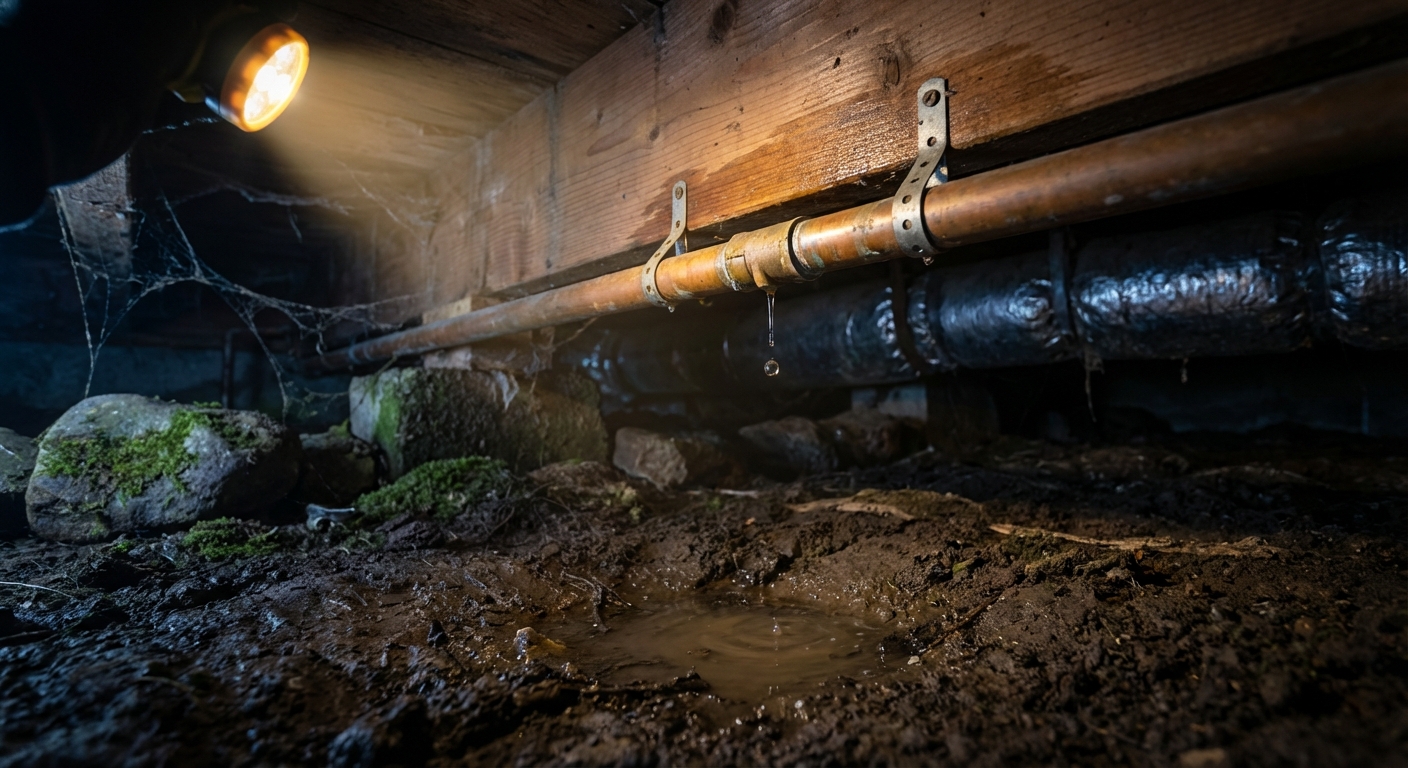
In the Pacific Northwest, a crucial area often suffers from an “out of sight, out of mind” mentality: the crawl space. While a catastrophic pipe burst demands immediate attention, the real danger often lies in the “slow leak”—a pinhole drip or gradual seepage that causes silent, compounding damage.
Through the “stack effect,” 40% to 50% of the air you breathe on the first floor originates from your crawl space. This means damp air carrying mold spores and odors can pollute your home. Signs like cupping hardwood floors, skyrocketing energy bills, and persistent musty smells are your home’s way of asking for help.
Ignoring a slow leak leads to wood rot, pest infestations, and serious health risks. The financial impact is exponential: fixing a leak costs hundreds, but structural restoration can cost upwards of $15,000, and many insurance policies exclude damage from “gradual” leaks. Modern science advocates for encapsulation to protect your home. Don’t guess about what lies beneath your floors—early detection is your best defense.